Table of Contents
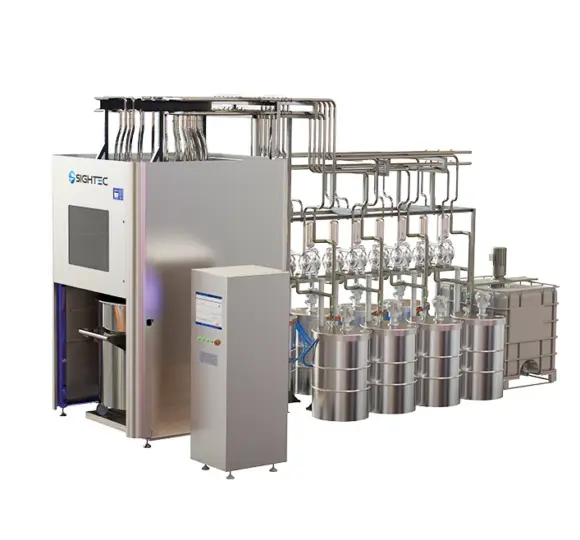
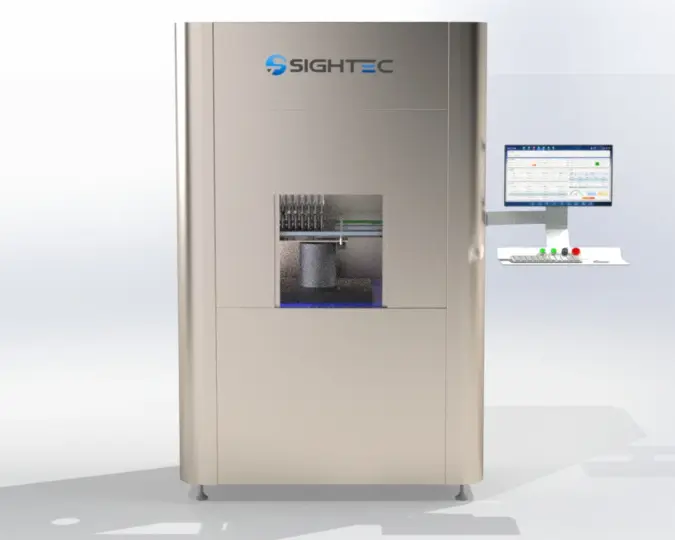
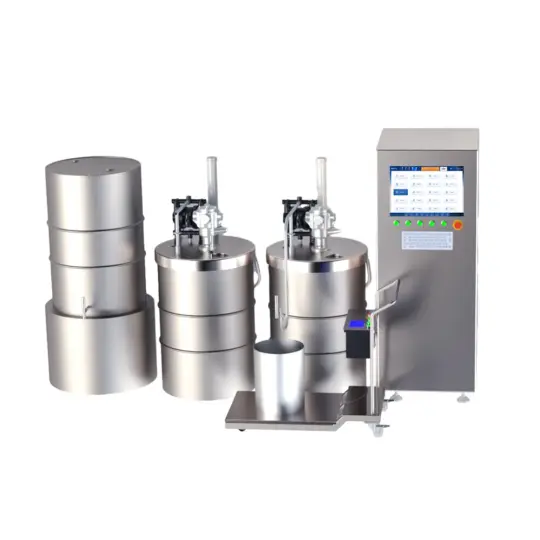
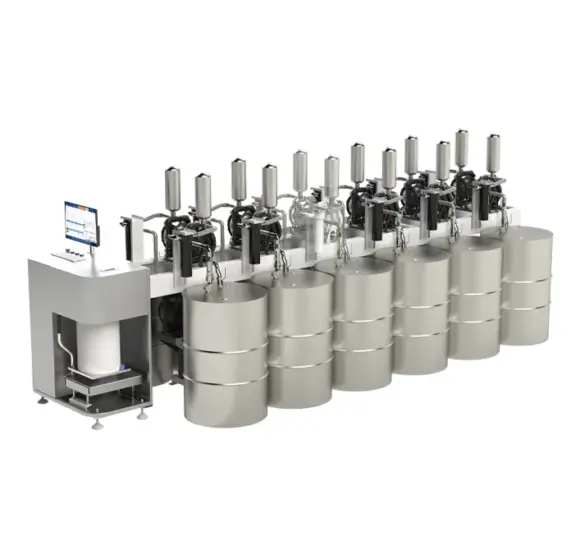
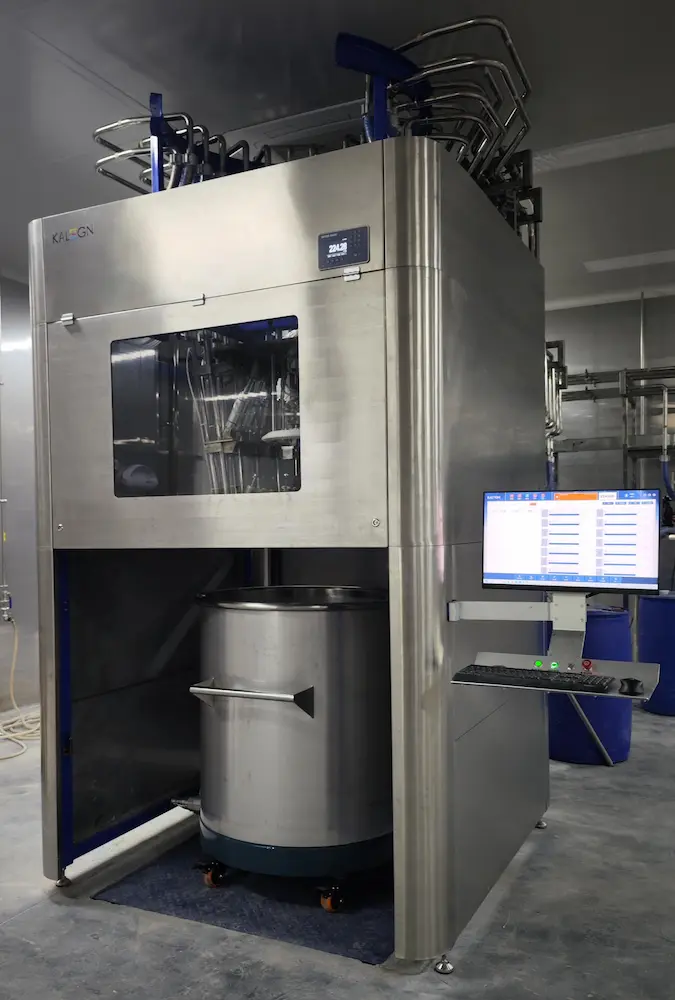
In printing workshops, one often comes across a piece of equipment featuring a row of colour paste tanks. With just a few taps on the screen, the machine hums as it dispenses liquids of different colours into the buckets. This is an ink dispenser machine. Many people, upon seeing it for the first time, might think it is merely a sophisticated peristaltic pump, but only when actually using it do they realise that the problems an ink dispenser machine solves go far beyond simply “dispensing colour paste”.
1. What Problems Does an Ink Dispenser Machine Actually Solve?
The greatest challenge in colour reproduction lies in the inconsistency of human colour judgement, fluctuations in pigment concentrate concentration between batches, and variations in operators’ techniques. It is all too common in the workshop for the same formula to appear reddish when mixed by Master A, yet yellowish when mixed by Master B.
The core task of an ink dispenser machine is to transform “colour matching”—which relies on the intuition of experienced craftsmen—into a repeatable, traceable process. It must guarantee three things: accurate dispensing volume, reproducible formulations, and consistent colour results. Put simply, an ink dispenser machine is not designed to select colours for you, but to “execute” them.
2. Basic Components of an Ink Dispenser Machine
A complete ink dispenser machine typically comprises the following parts:
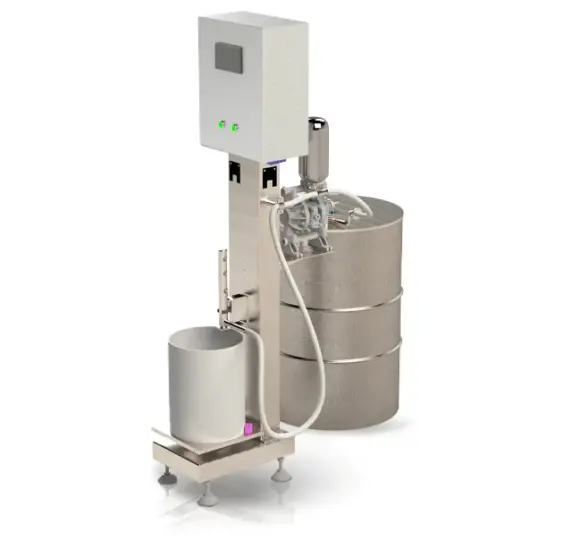
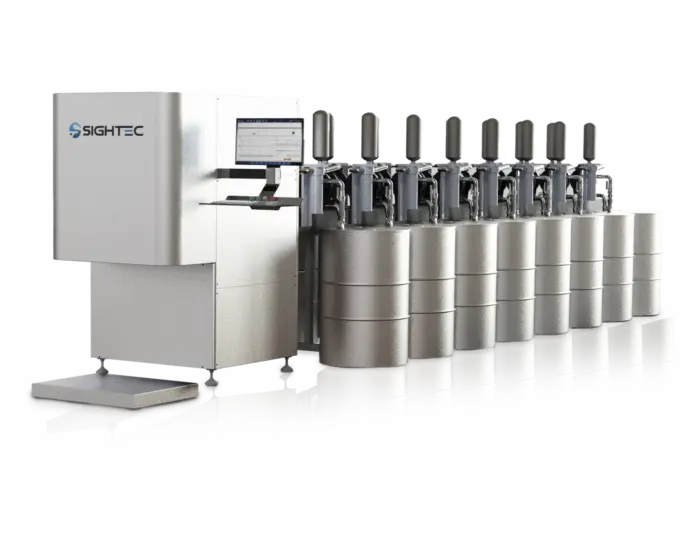
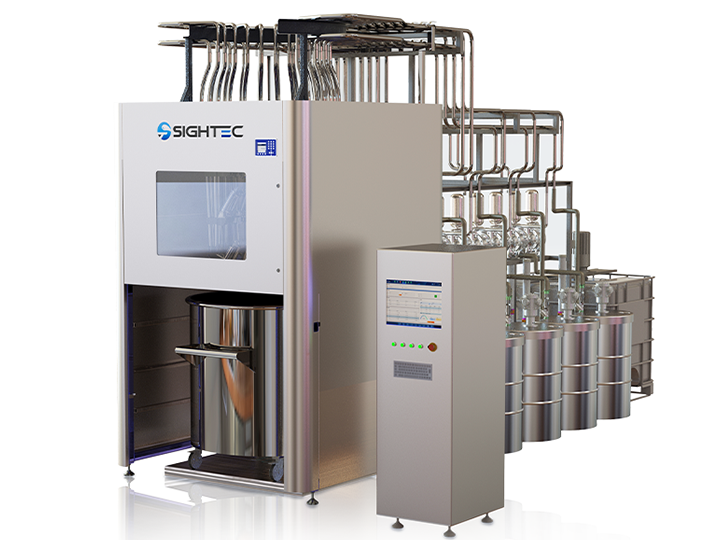
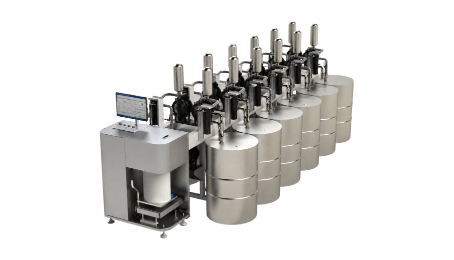
Raw material tanks: These hold the base materials, with the number ranging from a few tanks to tens, hundreds, or even thousands.
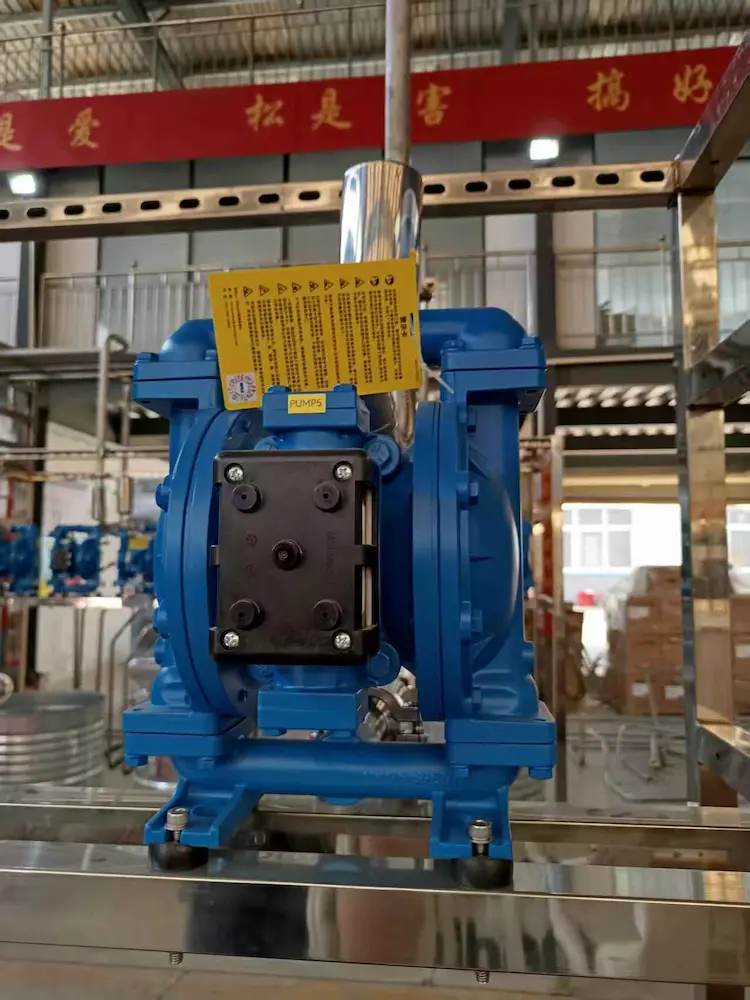
Pump units: Common types include piston pumps and diaphragm pumps. Our ink dispenser machine uses ARO and SANDPIPER diaphragm pumps.
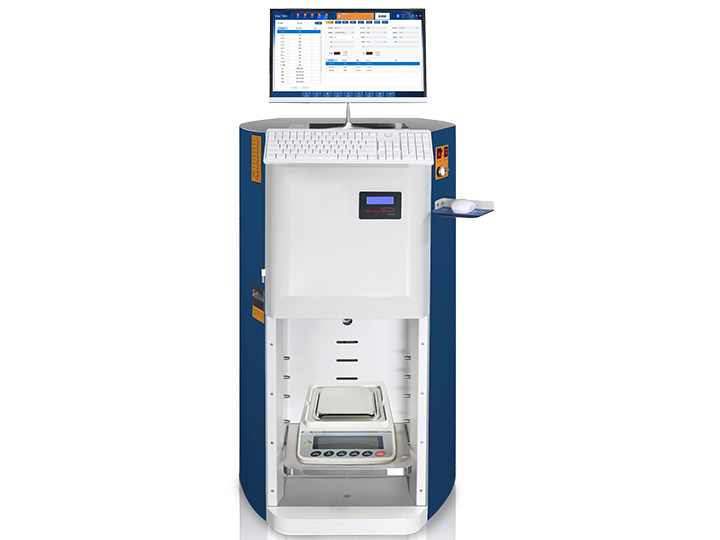
Measuring systems: Manual models rely on graduated scales, whilst automatic models use electronic weighing systems or high-precision flow meters.
Dispensing valves: These dispense the colour paste into the base paint or ink containers.
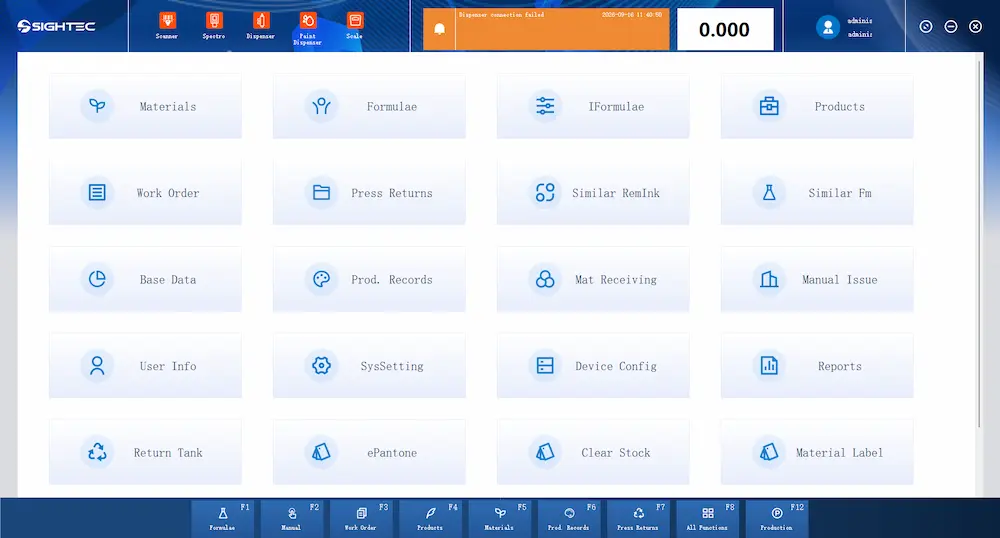
Control software: Responsible for selecting formulations and issuing commands.
Colour-matching software and spectrophotometer: Spectrophotometers generally utilise X-Rite products; they are responsible for scanning sample colours and calculating formulations.
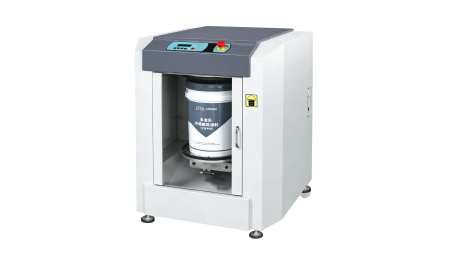
Mixing machines: Shakers, mixers, or dispersers ensure thorough blending of the colour paste and base paint.
3. Main Categories of Ink Dispenser Machine
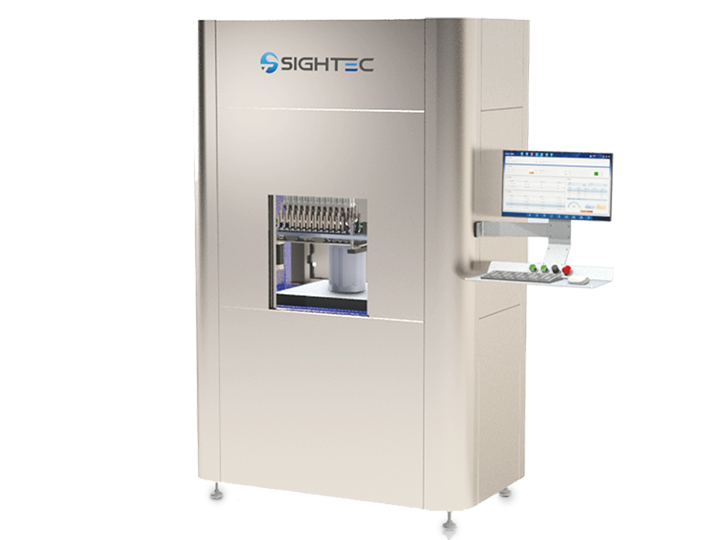
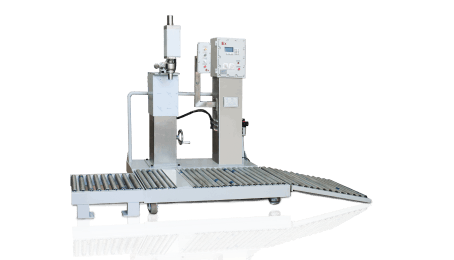
Classified by degree of automation, there are manual and automatic ink dispenser machine. Manual ink dispenser machines rely on operators to read scales and operate the pump manually; automated ink dispenser machines are computer-controlled and operate the mechanical components to dispense the material.
Classified by the number of tanks, models include 12-tank, 16-tank, and 24-tank options, with a maximum capacity of 64 tanks. The greater the number of tanks, the wider the colour range that can be covered; however, this also increases the equipment’s size and cost. More tanks are not necessarily better; the key factor is the number of colour pastes you actually use on a regular basis.
Classified by measurement method, there are volumetric and gravimetric systems. Volumetric measurement relies on a scale or piston stroke; whilst fast, it is affected by the viscosity and temperature of the colour paste. Gravimetric measurement uses an electronic scale; whilst offering higher precision, it is less sensitive to changes in the density of the colour paste. Both methods have their respective applications, and neither is inherently superior.
4. How does an ink dispenser machine work?
The entire process can be broken down into five steps:
The first step is colour measurement. A spectrophotometer is used to read the spectral data from a sample provided by the customer or a standard colour chart. This step is equivalent to “creating a profile” for the colour.
The second step is formula calculation. Colour-matching software uses the colour paste database to calculate the quantity of each colour paste required. The key here is the accuracy of the colour paste database; if the database does not match the actual colour paste batches, the calculated formula will be inaccurate.
The third step is dispensing. The ink dispenser machine injects the different colour pastes one by one into the base paint or base ink according to the formula. Manual models rely on operators operating the pump, whilst automatic models are programme-controlled.
The fourth step is mixing. The container lid is secured, and the mixture is placed in a shaker or blended using a stirring device. Inadequate mixing will result in a mottled colour.
The fifth step is verification. Where possible, the colour is measured again and compared against the standard; if there is a significant deviation, fine adjustments are made. This step is particularly important prior to mass production.
5. In which industries are ink dispenser machine used?
The most typical application is packaging printing. Whether it be intaglio printing, flexography, or screen printing, wherever batch production or custom-coloured inks are involved, ink dispenser machine prove invaluable. Label printing plants demand high colour consistency and frequently change color; automated ink dispensing systems can reduce cleaning time and minimise ink waste.
The next most common application is in the coatings and paints sector. Whether for architectural coatings, industrial paints, decorative paints, or automotive refinish paints, an ink dispenser machine is utilised for both on-site colour matching at retail outlets and bulk colour matching in factories. Coating colour-matching machines are generally used in conjunction with base paint drums, with the mixed product transferred directly to a blending machine.
Furthermore, industries such as textile printing and dyeing, plastic colouring, cosmetics and leather also have colour-matching requirements; however, as the pigment paste systems and equipment requirements vary considerably, one cannot simply adopt the same solutions used for coatings or inks when selecting the appropriate equipment.
6. What to focus on when selecting an ink dispenser machine
Firstly, consider the frequency of colour matching. The requirements for the equipment are entirely different depending on whether you need to match colours a few times a day or several dozen times a day. For low frequencies, a manual ink dispenser machine will suffice; for high frequencies, the efficiency advantages of an automatic machine will be very evident.
Secondly, consider the colour paste system. Do you use water-based colour pastes, solvent-based colour pastes, or UV inks? Different systems have different requirements for the pump body, seals, and piping materials.
Thirdly, consider the minimum dispensing volume and accuracy. In some formulations, a particular colour paste may only need to be added in quantities of a few tenths of a millilitre; if the machine’s minimum dispensing volume is insufficient, the colour will be off. This parameter warrants greater attention than the maximum dispensing volume.
Fourthly, consider whether cleaning and maintenance are convenient. The most challenging aspect of an ink dispenser machine is cleaning its internal components. If the cleaning design is poorly thought out, the time wasted changing colours will exceed that spent on the colour-matching process itself.
Fifth, consider software compatibility. Can your formula formats, colour paste database, and spectrophotometer interface with the ink dispenser machine? If the software is incompatible, even the best hardware will be unable to perform to its full potential.
Sixth, consider after-sales support and consumables. Can the supplier ensure a stable supply of wear-and-tear parts such as O-rings, pump bodies, and dispensing nozzles? How responsive is their after-sales service?
7. Several Common Misconceptions
Misconception 1: Automatic ink dispenser machine is always better than manual ones. It depends on the scenario. Where colour-matching frequency is low, colour codes are fixed, and operators are experienced, a manual machine is perfectly adequate; the money saved can be spent on higher-quality colour pastes.
Misconception 2: An ink dispenser machine can replace colour-matching software. No, it cannot. The ink dispenser machine is the executive mechanism; the colour-matching software is the brain. Without an accurate formula, the machine cannot produce the target colour, no matter how precisely it dispenses the materials.
Misconception 3: Once purchased, you can simply leave it to its own devices. An ink dispenser machine is precision equipment that requires regular calibration and maintenance. If treated as an ordinary piece of equipment, its accuracy will deteriorate rapidly.
Conclusion
When it comes to ink dispenser machine, it is not the case that the more expensive the machine, the better; rather, the better it suits your specific operating conditions, the better. First, clarify how many types of materials you handle, the daily volume of colour-matching required, the specific materials used, and how frequently cleaning and colour changes are required. Then, review the equipment specifications; this will enable you to select a model that is suitable for your factory whilst also saving costs.
If your factory is planning to purchase an ink dispenser machine, please contact us and let us know your specific operating conditions; we will design the solution that best suits your needs.