Table of Contents
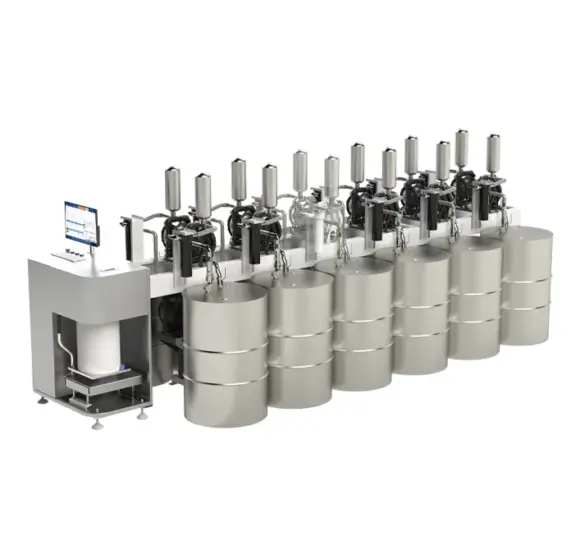
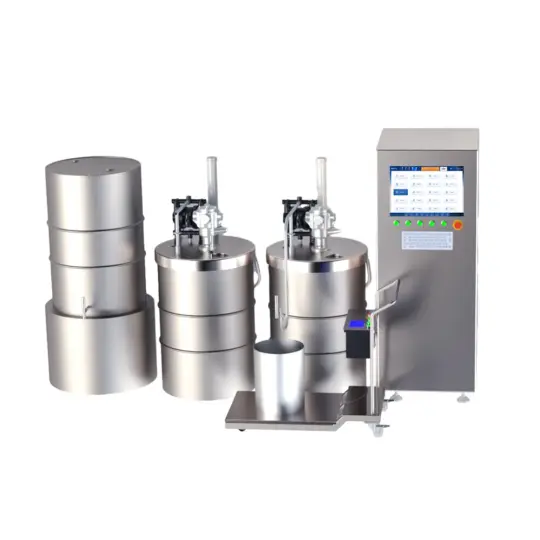
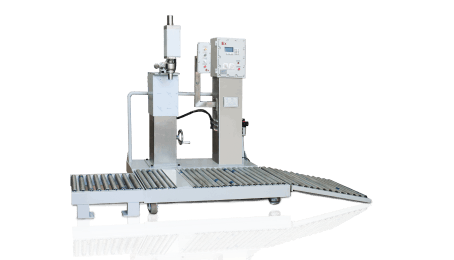
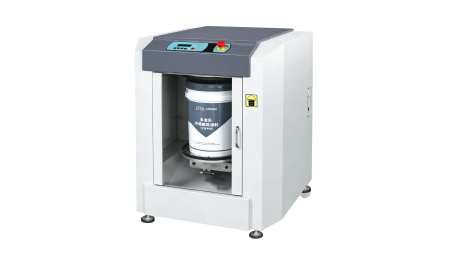
When purchasing equipment for the paint and ink industry, many customers are puzzled by the following: why do quotations from different manufacturers vary by several times, even though the automatic industrial dispensing equipment looks almost identical on the outside?
In reality, the equipment’s exterior and sheet metal are merely the “surface”; what truly determines an industrial dispensing equipment’s colour repeatability, long-term failure rate, and running costs is the “inner workings”—the supply chain system for its core components.
In this in-depth technical guide, we’ll dissect the internal configuration of high-end industrial dispensing equipment to examine exactly what role the components from these world-renowned brands play within the equipment.
Detailed Specification of Key Components in Industrial Dispensing Equipment
To provide a clear answer to the question most frequently asked by clients— “Which brands do you use?” —we have compiled a list of core component specifications:
| Core Component Module | Selected Brand | Core Function Performed in the Industrial Dispensing Equipment |
| Weighing System | METTLER TOLEDO | The measurement standards for colour pastes and base directly determine the accuracy of each colour-matching operation |
| PC | Dell | The operation of colour-matching software and the formulation database ensures stability in both complex calculations and day-to-day operations |
| Cylinder/Solenoid valve | SMC / AirTAC | The response speed of high-frequency pneumatic actuators and the long-term service life of seals |
| PLCs and expansion modules | SIEMENS | The nerve centre for the machine’s logic control, motion sequencing and communication with the underlying hardware |
| Terminal blocks | Weidmüller | The long-term stability of electrical connections, ensuring electrical safety in high-humidity and temperature-varying environments |
| Circuit breakers and sockets | Schneider Electric | Power distribution protection and operational safety, safeguarding against voltage fluctuations in the workshop |
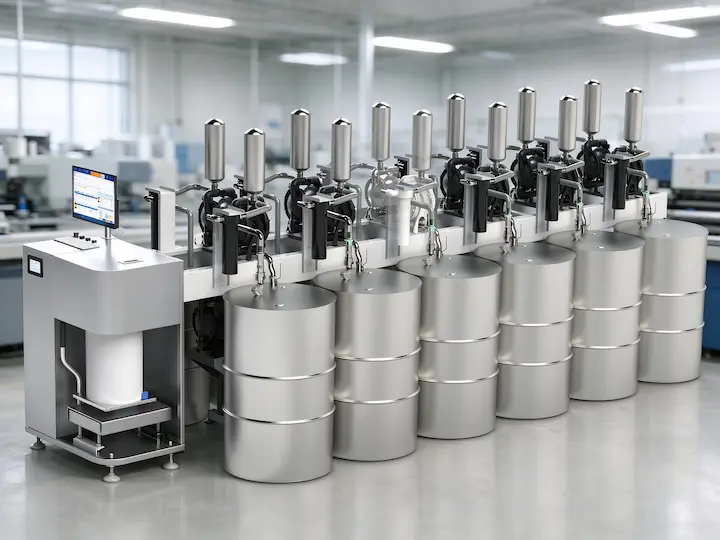
| Diaphragm Pump | SANDPIPER / ARO | Handling the conveyance and circulation of high-viscosity, particulate-containing colour pastes to minimise wear |
| Multi-stage high-precision valves | in-house production | Precise control of micro-dosing and anti-drip measures for colour paste at the dispensing end |
All purchased components undergo incoming quality inspection before being put into stock, and engineers run compatibility tests before assembly to prevent early machine failures caused by hardware compatibility issues. However, many people still wonder exactly what problems these parts solve.
1. METTLER TOLEDO: Electronic Scales
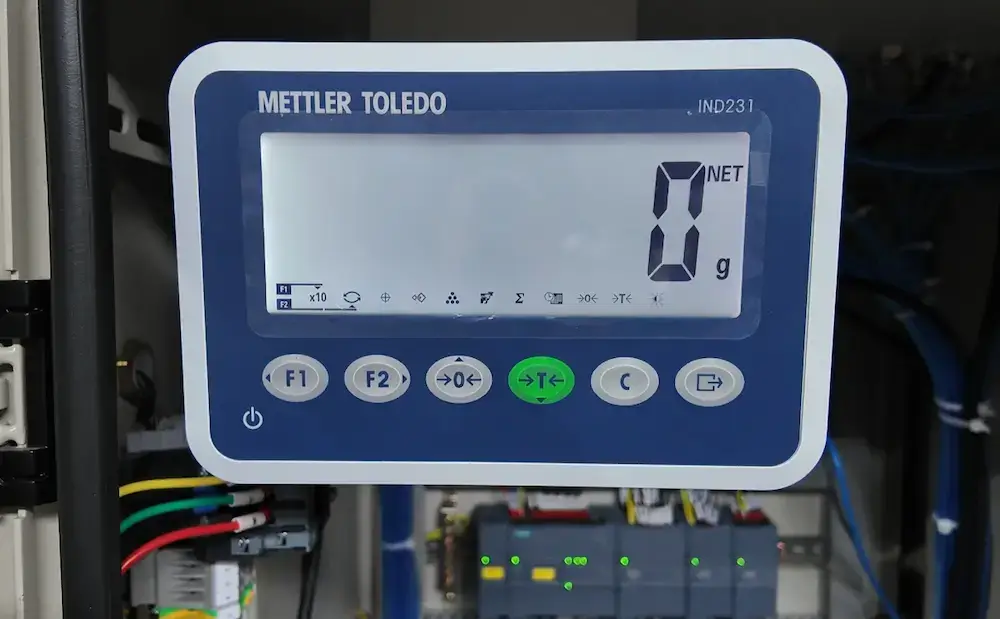
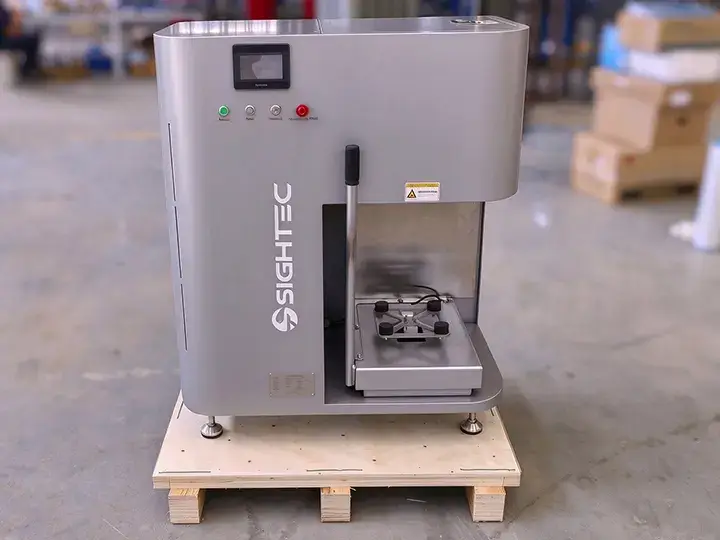
All the complex calculations performed by industrial dispensing equipment ultimately boil down to “adding a specific number of grams of colour paste”. If the weighing system at the very source drifts, even the most sophisticated colour compensation algorithms will be rendered ineffective.
METTLER TOLEDO’s standing in the field of industrial weighing is beyond question. However, in colour-matching applications, what is particularly valued is its optimisation for specific operating conditions such as “viscous fluids, frequent taring and micro-dosing”. Dedicated paint-mixing scales are far superior to standard industrial bench scales in terms of resistance to interference and long-term stability. Only when the underlying data is accurate do the formulations hold any significance.
2. Dell: Computer
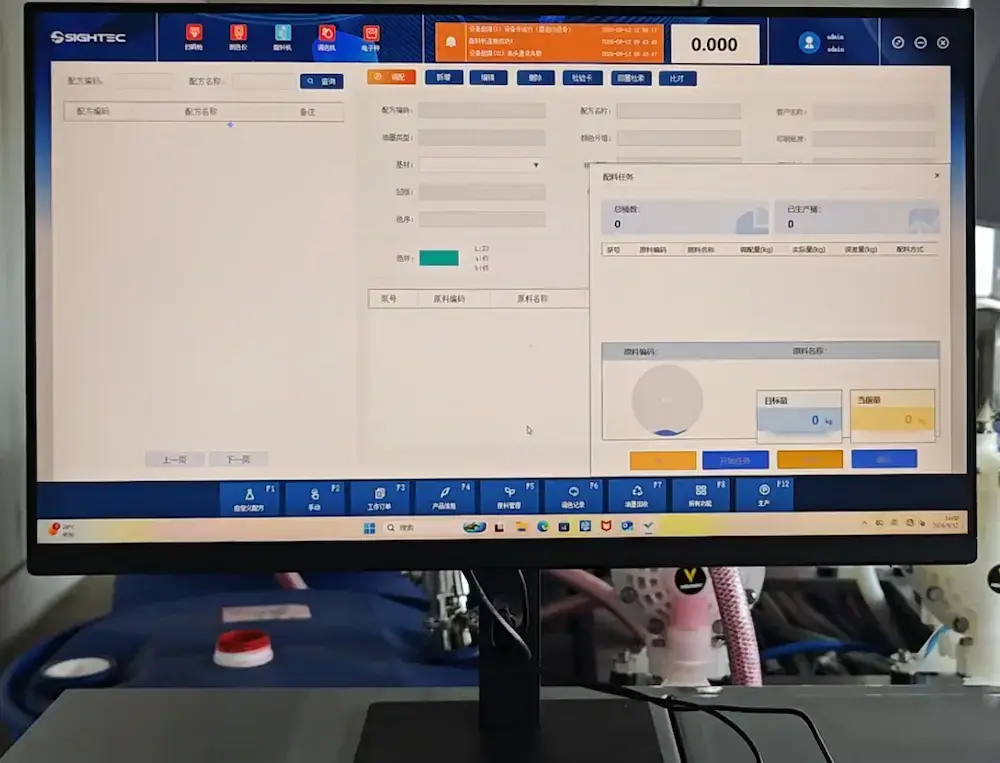
Modern industrial dispensing equipment is no longer merely mechanical devices; they are connected to vast formulation databases. The core considerations for selecting Dell as the host computer are commercial-grade stability and the after-sales support network.
Colour-matching software requires prolonged, stable operation to handle large volumes of data exchange. Dell’s commercial-grade computers effectively minimise the risk of system crashes and software lag.
Typically, we utilise the following configuration: CPU: i3 RAM: 8GB SSD: 512GB HDD: 1TB (dual-drive configuration, with the mechanical hard drive used for data backup to ensure data security) Monitor: 23.8.
3. SIEMENS: PLC
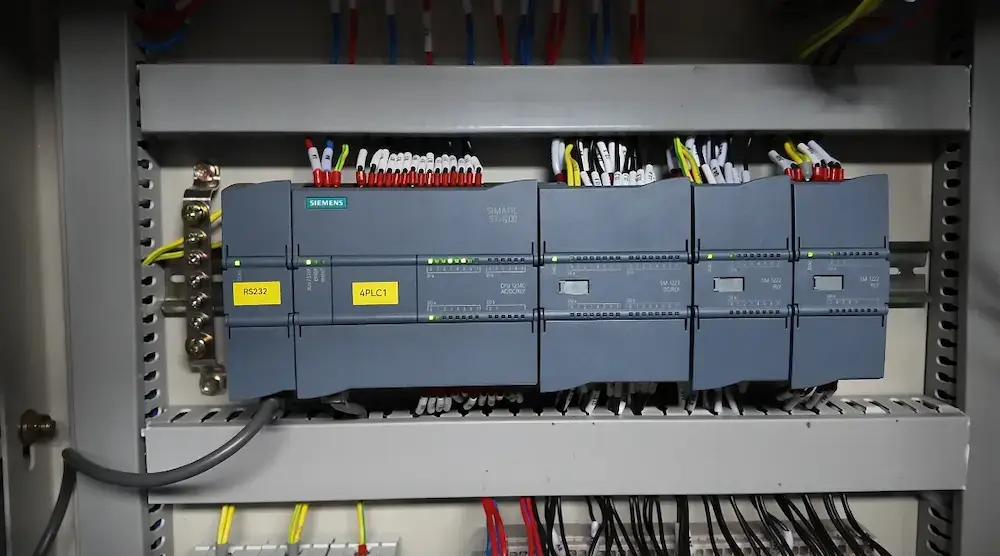
If the computer is the brain, then the SIEMENS PLC is the industrial dispensing equipment’s “central nervous system”. It is responsible for reading data from the scales, controlling the sequence of valve openings and closings, and communicating with the computer. The key to selecting it lies not in benchmark scores, but in its ecosystem and reliability. In humid, vibration-prone industrial environments, the Siemens PLC ensures that every opening and closing cycle of the pneumatic valves is precise to the millimetre, guaranteeing the accurate sequencing of multi-stage colour mixing.
4. SMC / AirTAC: Cylinders and Solenoid Valves
Cylinders and solenoid valves are the “consumables” within the industrial dispensing equipment, potentially operating several thousand times a day. SMC, a leading Japanese pneumatic manufacturer, offers extremely fast response times and long seal life; AirTAC, meanwhile, is the undisputed leader in value for money.
High-end equipment manufacturers typically adopt the following approach: they use SMC components at high-frequency, critical points—such as dispensing and fine-tuning—to ensure precision, whilst utilising AirTAC for routine auxiliary operations to control costs. This pragmatic allocation offers customers better value for money than blindly pursuing an “all-SMC” setup.
5. SANDPIPER / ARO: Diaphragm Pumps
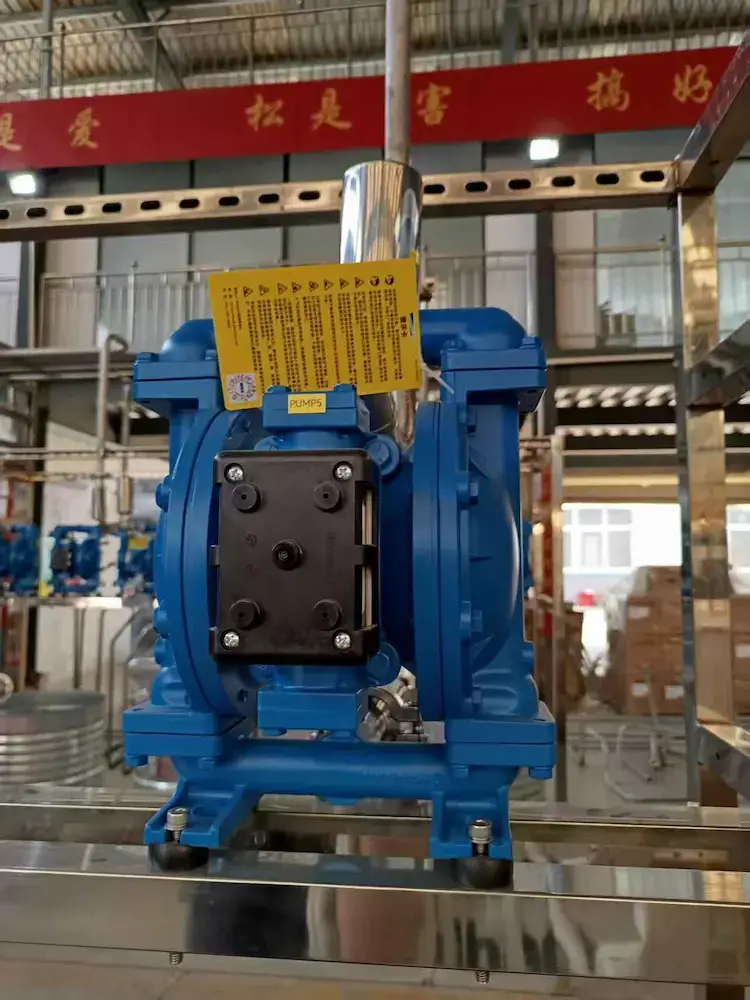
Pigment paste is not simply water; it contains high solids, particles, and corrosive substances. Ordinary pumps are prone to wear or blockages.
SANDPIPER and ARO pneumatic diaphragm pumps are widely used in the coatings industry because they are specifically designed to handle “difficult-to-pump fluids”. They deliver a stable circulation flow rate and are constructed from wear-resistant materials, which is crucial for minimising daily maintenance downtime for colour-matching machines.
6. Weidmüller and Schneider Electric: Terminal blocks, sockets and circuit breakers
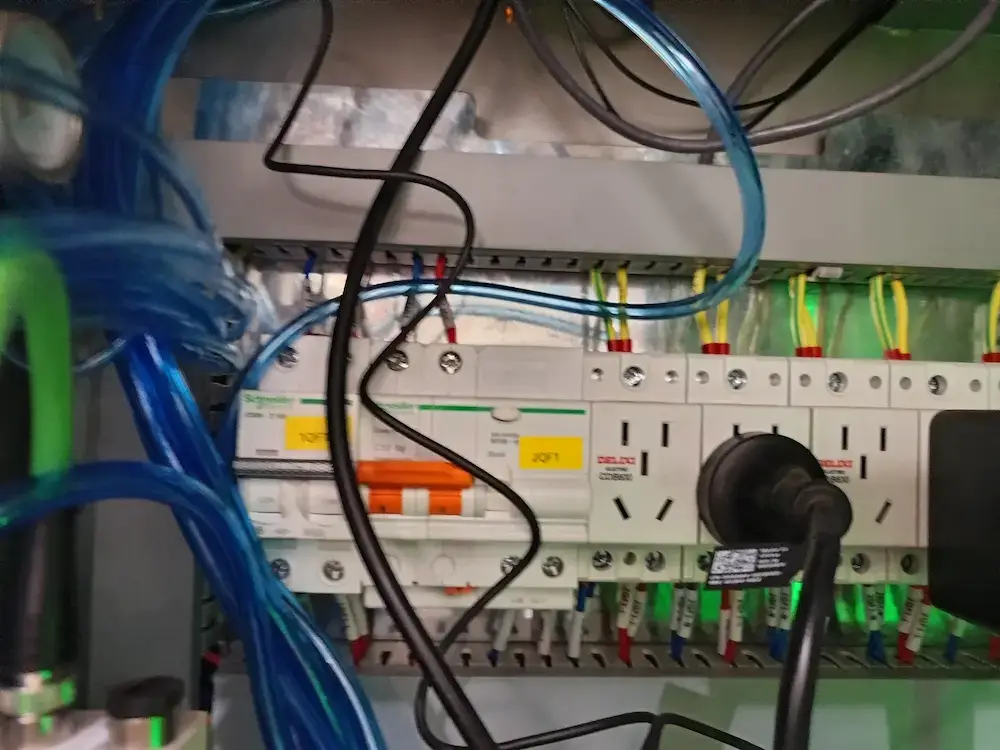
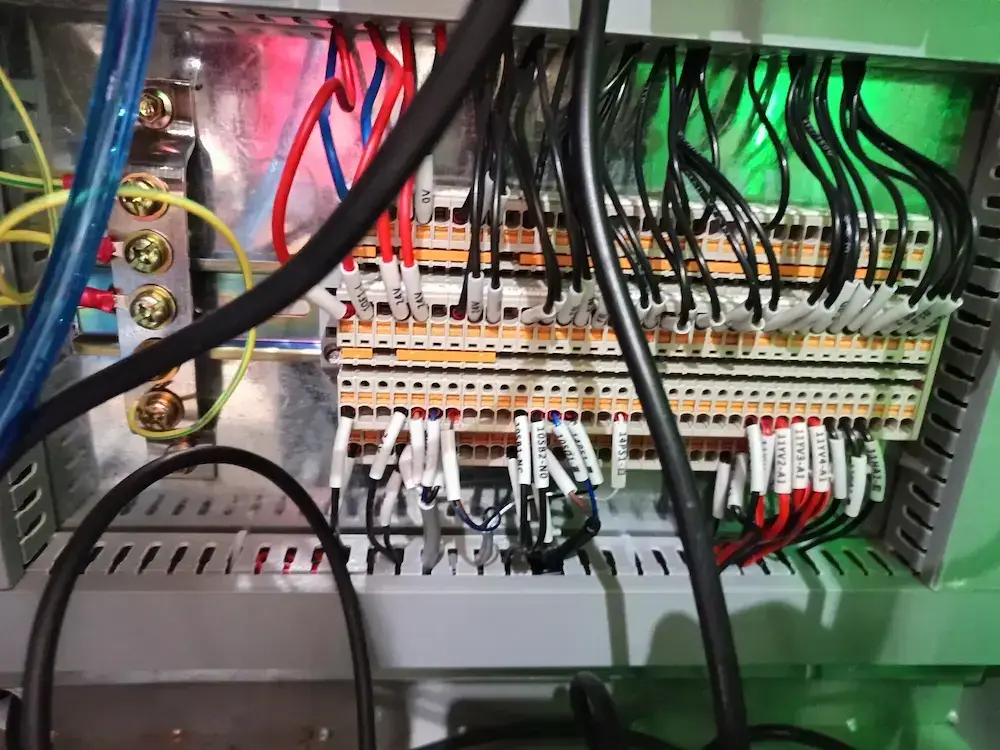
Terminal blocks, sockets and circuit breakers – these seemingly insignificant items on the procurement list determine the “electrical lifespan” of the equipment.
Colour-matching workshops are often characterised by high levels of dust and humidity. Using Weidmüller terminal blocks (with a temperature range of –50°C to +120°C, flame-retardant and impact-resistant) and Schneider Electric circuit breaker sockets can effectively prevent electrical short circuits and fires caused by ageing components. Whilst the benefits may not be immediately apparent, after three years, these “small components” can save a great deal of trouble and expense associated with repairs.
7. High-precision valves
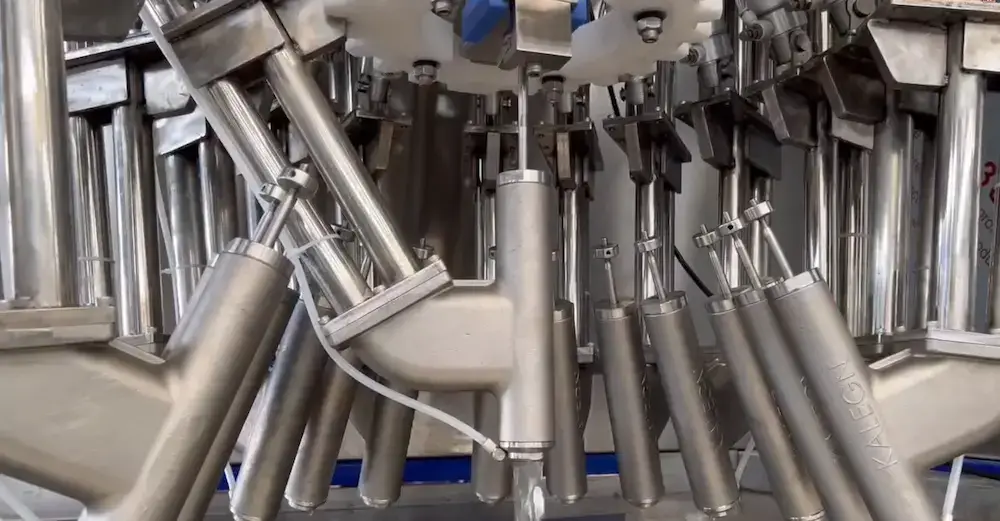
Valves are manufactured in-house because the viscosity of the colour paste and the anti-drip requirements are extremely specific; micro-dispensing at the end must be deeply integrated with the manufacturer’s own control algorithms and pump pressure.
Generic high-precision valves available on the market are rarely fully compatible with all systems. By developing their own valves, manufacturers seamlessly integrate “control code” with “mechanical execution”, thereby achieving the ultimate in minimum dispensing volume and anti-drip performance.
Most importantly, in-house valves can be customised in size according to customer requirements, offering greater flexibility in terms of dimensions and other aspects.
We do not simply assemble individual components; our R&D and assembly teams match components based on the industrial dispensing equipment’s actual operating conditions, ensuring the stability of the entire machine whilst offering competitive equipment procurement prices.
Would you like to find out more about industrial dispensing equipment configurations?
If you are comparing several industrial dispensing equipment suppliers and would like to know more about detailed hardware configurations, customised solutions and lead times, please feel free to send us an enquiry. Our sales and technical team can explain suitable component solutions tailored to the specific needs of your shop or factory. Contact us to receive full component specifications and a quotation.
FAQ
Can you provide the specific brand names for each component?
We partner with several globally renowned suppliers; due to supply chain considerations, components of the same grade from leading manufacturers may be used as substitutes across different batches. Should you require comprehensive component documentation for project evaluation, please contact our sales team to request this.
Can the in-house manufactured multi-stage high-precision valves be purchased separately as spare parts?
Yes. All original factory-manufactured valves corresponding to each machine model are available for separate purchase; they can be ordered alongside the machine or as spare parts for future equipment maintenance.
What is the approximate service life of these components?
Service life depends on daily operating hours, the type of colour paste used, and the level of routine maintenance. With proper basic cleaning and maintenance, the combination of international-brand components and our in-house developed valves ensures long-term, stable operation. Upon delivery of the equipment, we will also provide comprehensive maintenance guidelines.