In recent years, the prominence of water-based coatings in the global coatings market has continued to grow. As environmental regulations become increasingly stringent across nations and consumers show greater interest in low-VOCs (Volatile Organic Compound) products, water-based coatings are rapidly replacing traditional solvent-based coatings. According to Exactitude Consultancy’s market report, driven by stricter environmental regulations and growing demand for eco-friendly products, the global water-based coatings market was estimated at around $25 billion in 2024. The market is forecast to expand at a 6.5% compound annual growth rate (CAGR) between 2025 and 2034, reaching approximately $46 billion by the end of the forecast period. (Source: Exactitude Consultancy, Water‑Based Coatings Market Report, Feb 2025. Disclaimer: Figures are third‑party forecasts for reference only.) In the Chinese market, demand for water-based coatings is also growing steadily, driven by the advancement of the “Dual Carbon” targets and rising public health awareness.
As the market expands rapidly, the technical challenges faced during the production and formulation of water-based coatings are becoming increasingly apparent. Many coatings manufacturers have found that formulations which perform excellently in the laboratory often encounter numerous problems when scaled up to mass production—including significant colour variations between batches, large fluctuations in viscosity, and low production efficiency.
In today’s article, we will delve into the four most intractable challenges in the formulation of water-based coatings and explore how Sightec’s equipment helps clients tackle these challenges one by one through a systematic solution.
Formulations for water-based coatings typically consist of multiple components, such as resins, additives, pigments, and water, with strict specifications for the addition levels of each component. Take pigment dispersion as an example: in water-based systems, the dispersion stability of pigment particles is influenced by multiple factors, including the system’s pH, electrolyte concentration, and the type of dispersant. Research indicates that achieving good dispersion of pigment-grade titanium dioxide particles (200–400 nm) at low viscosity is inherently challenging due to their large particle size and high density. Speciality pigments such as carbon black are even more difficult to disperse; they tend to increase the viscosity of the system and, if not properly stabilised, may undergo re-agglomeration.
Under traditional manual color matching methods, operators rely on experience for weighing and judgement based on tactile sensation; this is not only inefficient but also makes it difficult to ensure consistent accuracy in every weighing operation. This is particularly true for additives used in extremely small quantities—perhaps accounting for only a few thousandths of a per cent of the entire formulation—where errors in manual weighing are sufficient to render an entire batch of products unusable. Industry observers note that many paint manufacturers still rely on semi-automatic or manual feeding production lines, making it difficult to precisely control dispersion time, grinding fineness, and additive dosage. Taking water-based eco-friendly paints as an example, even a slight deviation in stirring speed can cause the emulsion to break.
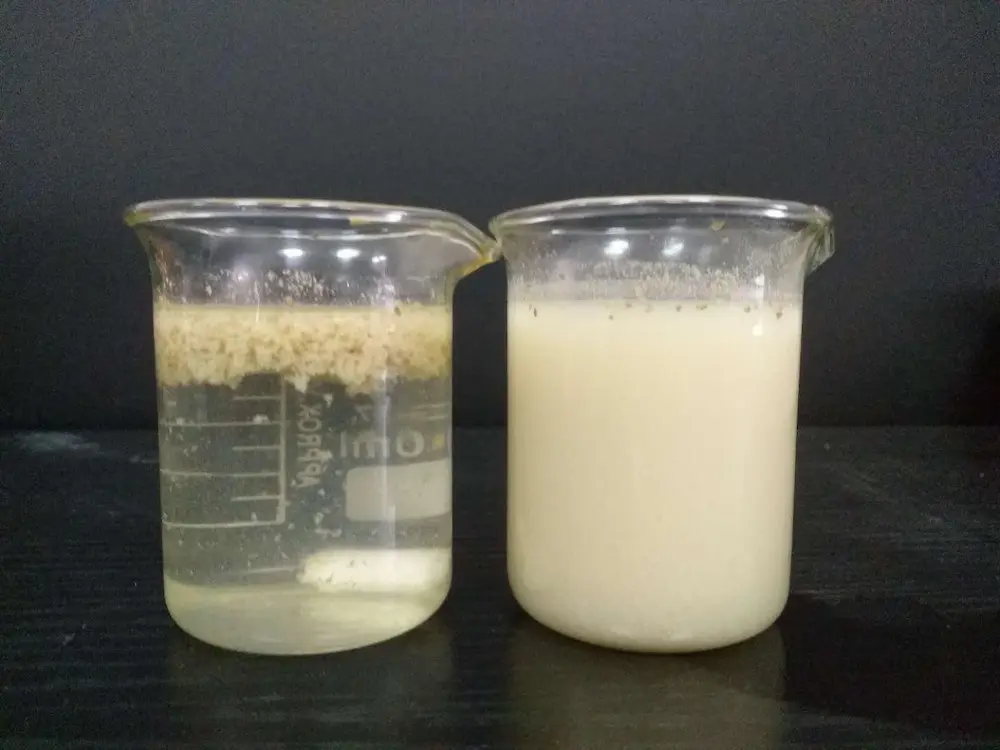
This is the most vexing problem for many coatings manufacturers. Despite using the exact same formula and raw materials, the previous batch may have turned out perfectly, whilst the next batch develops issues—such as significant colour variations, incorrect viscosity, or altered application performance.
The root cause lies in the reliance on manual labour in traditional production methods. As operators’ habits and skill levels vary, it is difficult to ensure complete consistency in variables such as the sequence of ingredient addition, mixing time and dispersion speed. Data indicates that in the past, many paint manufacturers relied on manual weighing and empirical colour matching, resulting in deviations in dispersion time, grinding fineness, and additive dosage for each batch. For products such as water-based paints, which demand extremely high formulation precision, even fluctuations in temperature and humidity can affect the emulsion’s film-forming properties.
The consequences of batch-to-batch inconsistency are severe. Some industry cases show that the quality of coatings is not guaranteed because of an unstable batch of purchased resin, and serious quality accidents occur after construction—the paint film falls off directly, falls off when it meets water, and is not resistant to sunlight, forming positive and negative surface. These problems not only cause direct economic losses, but also damage the brand reputation.
Viscosity is one of the most difficult parameters to control in the production of water-based coatings, and there is no “just right” option—not high, not low.
If the viscosity of the coating is too low, it is easy to sag during construction, and the thickness of the coating can not be guaranteed; Too high viscosity leads to poor atomization during spraying, surface defects such as pockmarks and orange peel. The viscosity of water-based coatings is particularly “sensitive”—the addition of a thickening agent, the change of stirring speed and the pH value of the system will cause significant fluctuations in viscosity. Some studies have pointed out that rapid pH change may lead to “pH shock”, leading to local gel seed formation, sudden surge in viscosity, insufficient pigment wetting, and other problems.
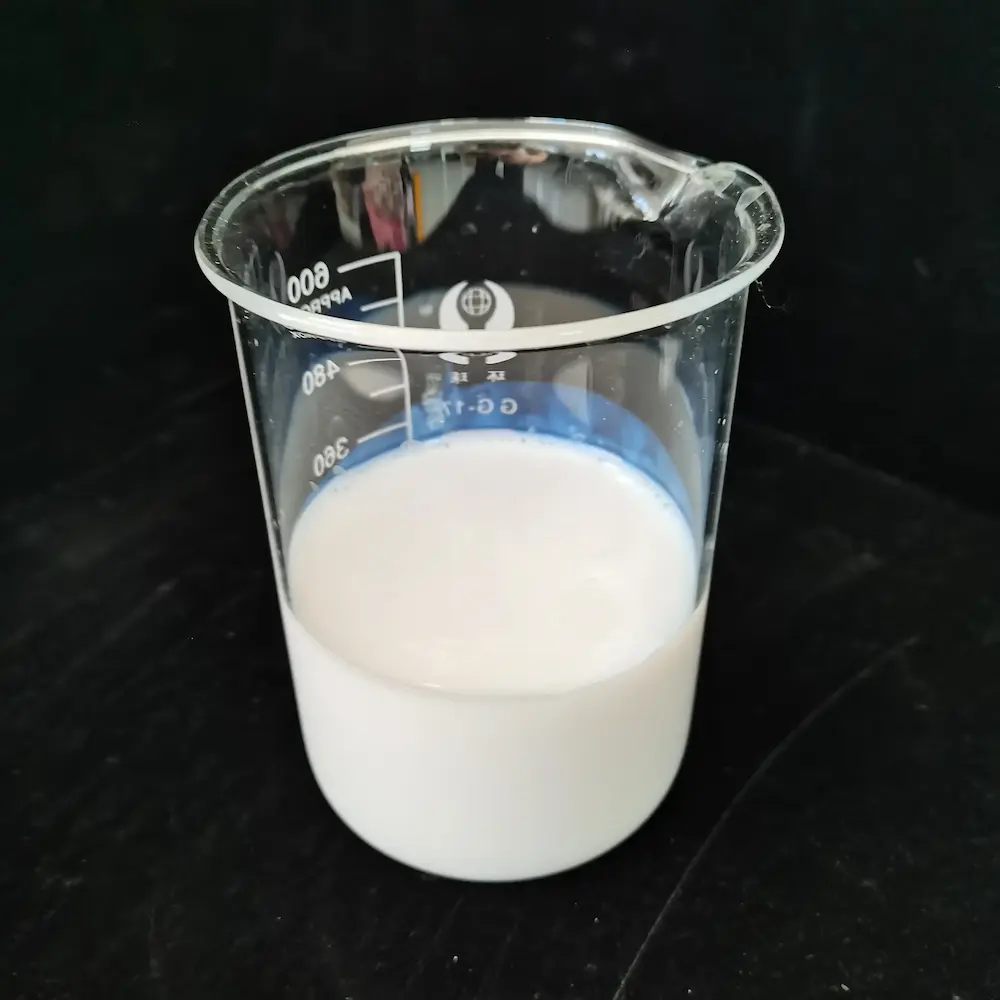
In actual production, many enterprises rely on the experience of operators to judge whether the viscosity reaches the standard, lacking quantitative standards and real-time monitoring means. This method is not only low in accuracy, but also difficult to replicate—if you change people and shifts, the result may be completely different.
The production of water-based coatings involves a large amount of data—batches of raw materials, dosage, production time, equipment parameters, temperature and humidity, operators … If these data are recorded manually, it is not only a heavy workload and easy to make mistakes, but also difficult to analyze and utilize effectively.
What’s more troublesome is that when a batch of products has quality problems, it is difficult to quickly locate which link the problem is—the raw material batch problem if there is no complete data traceability system. Is it a feeding failure? Or is the equipment parameter drifting? Under traditional production methods, the answers to these questions often rely on “guesswork”, resulting in extremely low efficiency.
Addressing the four major challenges outlined above, Sightec’s flexible coating batching and colour-matching production process solution offers a comprehensive set of strategies.
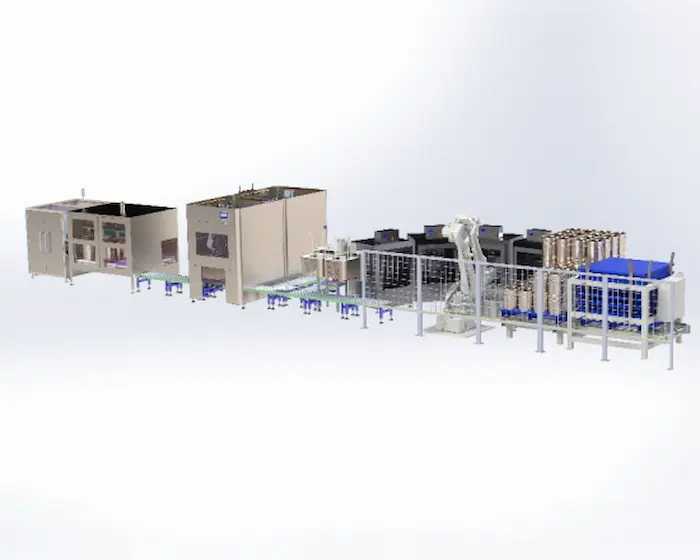
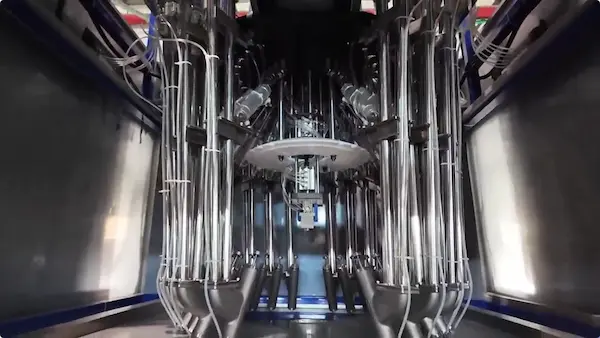
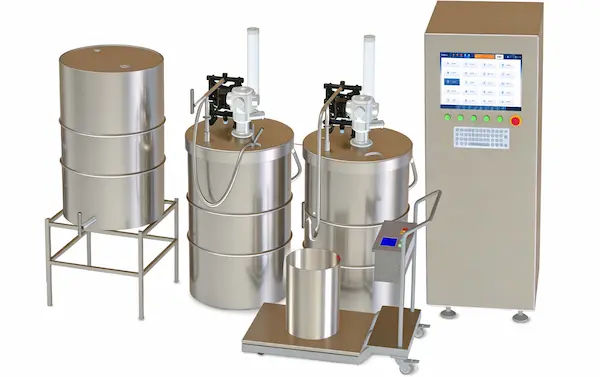
In terms of mixing accuracy, Sightec employs an intelligent online mixing and conveying system. By combining multi-stage valve mixing heads with high-precision electronic scales (accuracy up to ±0.001 g), it precisely controls dispensing speed and accuracy. The system is equipped with “self-calibration” software, ensuring that binders, colour pastes and additives are mixed precisely according to preset formulations. Sightec’s high-precision batching system enables the accurate metering of powders, liquids, colour pastes and additives, providing customers with a fully automated end-to-end solution covering everything from raw material storage and conveyance to high-precision automatic metering, paint blending and colour matching, filtration and filling. In terms of colour control, Sightec’s system achieves a colour difference control accuracy of ΔE ≤ 2 (for printing workshops); when combined with a laboratory-grade colour-matching system, this fundamentally resolves colour variation issues.
In terms of batch consistency, Sightec fundamentally reduces the risk of human error by significantly minimising manual intervention. Formulations can be rapidly replicated and retrieved, with each production run strictly executed according to pre-set parameters, ensuring a high degree of consistency in the performance and quality of products across different batches. The system supports end-to-end digital management, from order processing and formulation management to production traceability; operators can easily access complex formulations via the human-machine interface and monitor production progress in real time.
With regard to viscosity control, whilst Sightec’s system does not directly “control” viscosity, it provides a fundamental guarantee of viscosity consistency through precise thickening agent dosing and a stable mixing process. The system integrates mixing requirements to ensure the stability and repeatability of the mixing process.
In terms of flexible production, Sightec’s system supports two modes: flexible batch mixing and intelligent flexible in-tank formulation, enabling production to be scheduled according to order volumes. This flexible production approach is particularly well-suited to current market trends towards small batches, a wide variety of products and customised colours. The system supports multi-product, small-batch production modes and can rapidly switch between different formulations to meet market demand for differentiated products such as speciality coatings and custom colours.
In terms of data management, the Sightec system features a comprehensive built-in module for reports and production statistics, capable of generating multiple evaluation reports to provide comprehensive data support for production management. Through the meticulous management of production data, enterprises can gain a better grasp of every stage of the production process, achieving a transition from “operating on experience” to “managing based on data”.
The market prospects for water-based coatings are undeniable—stricter environmental regulations, heightened consumer awareness, and continuous technological progress are all driving the industry forward. However, market opportunities are reserved for those enterprises capable of stable, efficient, and high-quality production. Formulation accuracy, batch consistency, viscosity control, and data management—these four key challenges are hurdles that every water-based coatings manufacturer must overcome.
Sightec’s flexible coating formulation and colour-matching production process solution is specifically designed to help overcome these hurdles. It is not merely a set of equipment, but a production management system that assists coating manufacturers in transitioning from “relying on experience” to “relying on data”. In this increasingly competitive market, those who take the lead in implementing intelligent upgrades at the production stage will earn greater trust from their customers.
If you would like to find out more about our flexible coating batching and colour-matching production process solution, please do not hesitate to contact us.
Source: Exactitude Consultancy, Water‑Based Coatings Market Report, Feb 2025. Disclaimer: Figures are third‑party forecasts for reference only.