If you’ve ever stepped into a printing plant still using old-school volumetric dispensers, you know the scene. A veteran operator squints at graduated cylinders, manually tweaking valves, hoping each batch of ink isn’t too thick or too thin. But as quality demands skyrocket, this method—reliant on human judgment and fixed volume—is fading fast. The industry standard is now gravimetric liquid dispensing, or simply, weighing ingredients.
So, why has the liquid dispensing machine world fully embraced weight over volume? Let’s break down this practical revolution happening on production floors everywhere.
The Old Way Fell Short: Why Volumetric Dispensing Failed Modern Ink Making
Before weight became king, liquid batching was all about volume. Piston pumps, gear meters, and flow counters measured by the liter or gallon. In theory, control the space filled, and you control the recipe.
In the messy reality of ink manufacturing process, theory often failed.
First, materials are unpredictable. Inks, resins, solvents—they’re often viscous and temperature-sensitive. Take a common thinner like “banana water.” Components like toluene or butyl acetate can expand or contract by over 0.3% with just a 5°C temperature swing. The same mark on a sight glass in summer vs. winter could mean different amounts actually used. One Southern ink maker learned this the hard way: a winter batch of ink dried too slowly, causing massive press downtime. The culprit? Colder temps shrank the solvent volume, throwing the whole formula off.
Second, complex recipes are hard to manage. Modern ink formulas can have 5, 10, or more components. Some additives, like anti-skinning agents, make up less than 1% of the total. Volumetric systems struggle with these micro-ingredients, often with errors above ±2%. It gets trickier: many inks require strict mixing sequences. Add Component B before A, and you might get gelling. Old volumetric systems used a maze of solenoid valves, where delays and drips were common, hurting batch consistency.
Third, data tracking was manual—and messy. With today’s strict environmental and safety rules, plants must track every ounce of solvent or chemical used. Volumetric systems rarely auto-log data. It’s all on clipboards and paper, prone to errors and lost sheets. This is a nightmare during audits or client traceability requests.
Why Weight Wins: Solving Core Industry Pain Points
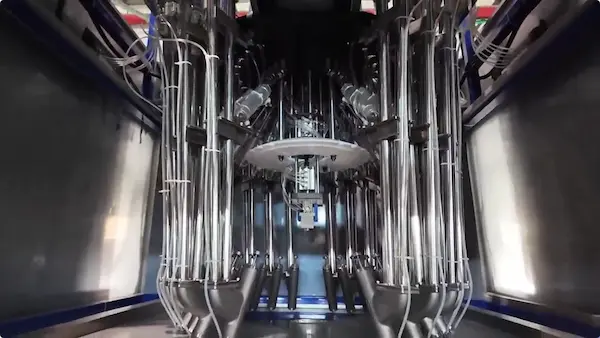
Gravimetric dispensing flips the script. It measures mass, not volume. High-precision load cells weigh ingredients in real-time, and a control system auto-adjusts feed rates. This simple shift in perspective tackles the industry’s biggest headaches head-on.
1. Unshakable Accuracy, No Matter the Conditions
Mass is a fundamental property. It doesn’t care about temperature, viscosity, or density changes. A well-tuned high accuracy liquid weighing system can hold errors under ±0.5%. For tiny but crucial additives, this is a game-changer. A packaging ink maker in Shandong reported that after switching to a multi-component liquid auto-dispenser, their additive dosing error dropped from ±3% to under ±0.5%. The result? A dramatic jump in color consistency for metallics and a 70% drop in customer complaints.
Modern systems also use “slow-down” logic. As the weight nears the target, the system switches to a dribble feed. This prevents over-shoot from the last splash of a viscous material—a common flaw with volume-based methods.
2. Handles Complex Formulas on Autopilot
Ink lines often run many custom colors. Modular gravimetric batching systems can be built with 2 to 20+ ingredient stations. The operator selects a recipe, and the system executes it—automatically dosing ingredients in the correct order and timing. This eliminates sequence-related errors and simplifies piping. Fewer valves mean lower maintenance costs (one plant reported a 40% reduction).
The cost savings on materials are huge. A mid-size printer doing their own spot color inks reported that after installing an automated solvent dispensing station, waste of expensive solvents (like isophorone) dropped from 8% to under 2%. That saved them nearly $80,000 a year on raw materials alone.
3. Full Digital Traceability for Compliance
Today’s smart weight-based dispensing controllers auto-record everything: timestamp, operator, actual weight of each component, batch ID. This data can generate reports or feed directly into a plant’s MES/ERP system. These digital records are audit-proof, satisfying ISO, GMP, and environmental regulations with ease. A Zhejiang-based maker of food-safe flexible packaging inks used this robust traceability to win approved-supplier status with major global brands.
These systems also have built-in safety. If an ingredient deviates beyond set limits (say, ±2%), the system stops and alarms. This prevents a whole batch of bad product from moving forward.
Real-World Case Studies: Gravimetric Dispensing in Action
Let’s move beyond theory. Here’s how precision liquid dispensing equipment performs on actual factory floors.
Case Study 1: Taming “Banana Water” for Solvent-Based Inks
Challenge: A label printer in Guangdong made solvent-based inks for adhesives. Their press-ready thinner (“banana water”) mixed 5-6 solvents like butanol and xylene. Manual mixing led to batch variations, causing inconsistent drying and press performance.
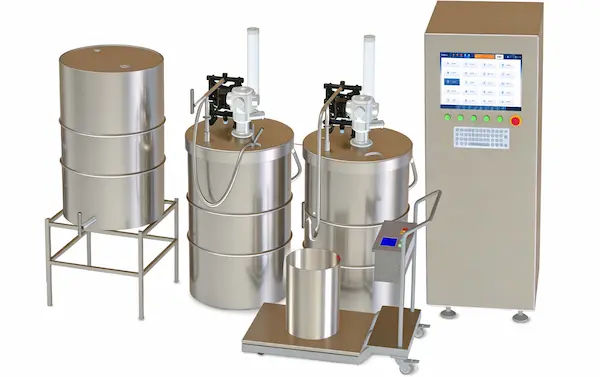
Solution: They installed an explosion-proof automatic weighing and dispensing system. The operator now just selects the “Standard Thinner” recipe on the touchscreen.
Result: The system draws and weighs each solvent from bulk tanks, all in a closed loop. Batch time fell from 25 minutes to 6. Most importantly, the perfect blend created an optimal evaporation curve. Press operators saw sharper dots and reliable drying. Complaints about ink being “too slow” or “too fast” virtually disappeared.
Case Study 2: Solving Mixing Problems in Water-Based Inks
Challenge: A water-based ink producer in Hebei struggled with resin’s high viscosity and tendency to separate. Volumetric dosing led to uneven batches, hurting final ink flow and adhesion.
Solution: They chose a gravimetric batch controller paired with an in-line dynamic mixer. While the weighing module precisely controls each input, the mixer actively shears and homogenizes the blend before it even hits the main tank.
Result: This high viscosity fluid batching solution produced more consistent ink fineness and stability. It specifically solved a persistent “post-thickening” issue, making their product more reliable for clients.
Case Study 3: Fast Turnaround for Custom Spot Colors
Challenge: A high-end ink service center in Shanghai handled dozens of custom color orders daily, from a few kilos to hundreds. Color matching tolerance was extremely tight.
Solution: They deployed a multi-recipe gravimetric dispensing machine. The system stores hundreds of past formulas. For a new order, a similar recipe is recalled and tweaked. Using ultra-precise load cell technology, it can accurately dose minute amounts of tinting paste (sometimes just grams).
Result: Sample turnaround slashed from half a day to under one hour. This rapid custom color dispensing capability became their key competitive advantage, allowing them to respond to client needs with unmatched speed.
Choosing the Right System: Your Practical Checklist
Ready to upgrade from a volumetric to a gravimetric liquid filler? Keep these points in mind:
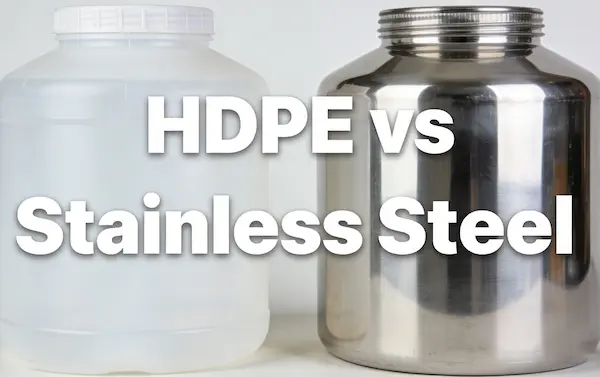
Material Compatibility is #1: Parts touching your product (tank, pipes, pumps) must withstand it. For esters and ketones, use stainless steel or specific plastics like PP. For harsh acids, you’ll need higher-grade alloys. Corrosion-resistant liquid dispensing equipment is non-negotiable for long-term reliability.
Safety is Non-Negotiable: In areas with flammable solvents (alcohols, acetates), you must choose a system with proper ATEX or IECEx explosion-proof ratings for the scale, motors, and controls. Don’t cut corners here.
Smart Features Should Be Useful, Not Just Flashy: A good system is easy to use. Look for core functions like recipe management, batch reporting, and user access levels. Check if it can connect to your plant’s software (MES/ERP). For operations with many products, a multi-formula dispensing controller is a major time-saver.
Think About Your Specific Process: Do you need closed system liquid dosing for volatile solvents? Is automated dilution ratio preparation a key need? Will you use it for precision printing ink blending or for adhesive and coating formulation? Define your main goal.
Once you’ve identified the right measurement method for your operation, the next practical question is how an automatic ink dispensing system actually executes a production run — from job order entry and container tare through sequential component dispensing, flush cycles, and residual ink logging. For a complete step-by-step walkthrough of the full dispensing workflow, see: How Does an Automatic Ink Dispenser Work? Step-by-Step Guide for 2026.
The Bottom Line: It’s More Than Just a Scale
The move from “reading volume” to “measuring weight” in liquid dispensing isn’t just a tech upgrade. It’s a sign of the printing and ink industry growing up—becoming more precise, data-driven, and efficient.
A modern industrial liquid weighing and batching system does more than get the recipe right. It builds a stronger, more reliable foundation for your entire operation: better quality control, tighter cost control, and simpler compliance control.
The future will bring even smarter systems, using IoT data and AI to predict maintenance or suggest recipe tweaks. But the core goal remains: to help you make a better product, more consistently and profitably.
Ready to see how gravimetric dispensing can transform your ink production or printing operation?
Let’s talk about your specific challenges. [Contact our team today for a free, no-obligation consultation]