In the paint, ink, and coatings industry, a colorant dispenser (also known as a tinting machine or paint mixing machine) is no longer just an option—it is the core tool that determines your production efficiency, inventory costs, and customer satisfaction. When you decide to invest in or upgrade your automatic dispensing system, the first critical question you face is: “How many heads do I need?”
Among the various specifications, 14-head and 16-head colorant dispensers are the most popular choices on the market. They also create the most confusion for buyers. At first glance, the difference seems to be just two colorant tanks. But in real-world production, these two heads represent much more than a simple number. They point to two different production strategies and capacity plans.
This guide will help you understand the core differences between 14-head and 16-head automatic dosing systems. We will also provide you with a clear decision-making framework. By the end, you will know exactly which paint dispensing equipment fits your business needs.
Before we dive into the comparison, let’s clarify a basic concept: What is a “head”?
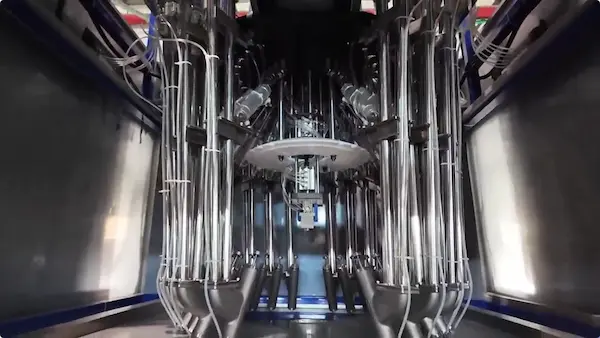
In an automatic colorant dispenser (often called a paint tinting machine or dosing equipment), a “head” refers to an independent storage and dispensing unit for colorant. Each head typically holds one specific type of colorant (for example: Titanium White, Carbon Black, Iron Oxide Red, Phthalo Blue, etc.).
When your color matching software sends a command, the machine activates the corresponding head. A precision piston or gear pump then injects an exact volume of that colorant into a can of base paint.
Therefore:
Number of heads = Number of colorant types you can have online and ready to use at the same time.
More heads mean your system can handle more complex color formulas and cover a wider color range.
Currently, you can find machines with anywhere from 8 heads to 32 heads or even more. The 14-head and 16-head dispensing machines are considered the “sweet spot.” They achieve a perfect balance between physical footprint, equipment cost, and the ability to cover the vast majority of colors used in architectural coatings.
Although it is only a difference of two heads, the impact of these two extra units affects your production and purchasing strategies for years to come.
This is the most obvious difference.
16-Head Colorant Dispenser: This machine features 16 independent colorant canisters. You can store 16 standard colorants simultaneously. For most water-based architectural paints, a standard colorant system (like 1K, 2K, C, M, Y, K, etc.) usually requires only 12-14 common colorants to cover over 90% of standard colors. The extra two heads provide significant flexibility.
14-Head Colorant Dispenser: This configuration perfectly meets the needs of a “base colorant” system. If your product line is very focused—for instance, you mainly produce emulsion paints in white, beige, and grey shades—a 14-head machine is more than sufficient.
Key Difference: On a 16-head machine, the two extra heads often become permanent homes for “special effect colorants” (like pearlescent, fluorescent, or metallic pigments) or “high-concentration/low-concentration backup colorants.” When you receive a special order, you can produce it immediately without removing and replacing any existing colorants. This significantly boosts your response time.
Today’s consumers want personalized colors. This trend challenges the “color depth” of your tinting system.
16-Head Advantage: A 16-head system handles complex formulas with ease. For example, some high-end architectural or industrial coatings require up to 15 or 16 different colorants for fine-tuning to achieve perfect color accuracy. With 16 heads, your hardware can handle these difficult recipes directly. You avoid the need for manual colorant changes.
14-Head Limitation: If a recipe requires more than 14 colorants, you must perform a “canister change.” This means stopping production, cleaning out an infrequently used head, and filling it with the special colorant needed. This process wastes time, increases solvent costs for cleaning, and introduces the risk of human error.
Adding two more heads inevitably changes the machine’s overall design.
Physical Dimensions: A 16-head paint mixing machine is usually slightly wider or deeper than a 14-head model, due to the two extra pump units and tanks. In a crowded factory workshop or a retail store, this difference of a few dozen centimeters can determine whether your layout works smoothly.
Weight: The extra components and the weight of full colorant cans make a 16-head system several dozen kilograms heavier than a 14-head system. You need to ensure your installation floor has adequate load-bearing capacity. Moving the machine also becomes more difficult.
Purchase Cost: A 16-head automatic dosing system has higher manufacturing costs. Its selling price is therefore typically higher than a 14-head model. If your business truly does not need that many colorants, spending the extra money is not efficient.
Minimum Inventory Cost: A 16-head machine means you need to keep at least 16 types of colorants in stock at all times (even if you use some very rarely). This ties up more working capital and warehouse space. A 14-head system is simpler and cheaper to manage from an inventory perspective.
Now that you understand the differences, it is time to make the decision. Match your business model to the scenarios below.
If you are a local paint shop serving DIY customers and painters within a few kilometers, your business has these traits:
Relatively fixed color demand: 80% of your orders are for the most popular few dozen colors.
Small batch sizes: You mainly tint 1L and 5L cans for home use.
Limited space: Shop floor space is valuable, and equipment often sits in a corner.
Conclusion: A 14-head colorant dispenser is enough.
A 14-head system covers over 95% of the colors on standard paint charts. It has a smaller footprint and a friendlier price tag. It maximizes your capital efficiency. You are better off investing the money you save into a better shaker machine or a more modern point-of-sale system.
If you handle commercial projects (like hotels, schools, or office buildings) or serve designers and professional painting companies, your business has these traits:
Wide color variety: You often need to match unusual colors from international color systems (like RAL, NCS, or Pantone), or match customer-provided samples.
Special effects involved: Projects frequently require metallic paints or textured finishes, which need special effect pigments.
Urgent orders, low error tolerance: A construction site cannot afford to wait. You cannot afford to delay a job because you lack a specific colorant.
Conclusion: A 16-head dispensing system is the safer, more professional choice.
The two extra heads are for these exact “non-standard” needs. You can permanently dedicate them to “universal additives” or “special effect colorants.” No matter what unusual order comes in, you can produce it immediately without stopping to change canisters. This “production flexibility” provides far more value than the small difference in the machine’s purchase price.
If you are a paint manufacturer producing small batches of industrial coatings or doing R&D sampling, your business has these traits:
Extremely complex formulas: Industrial coatings (like automotive or wood finishes) are far more complex than architectural paints. They often use 8 to 15 or more different colorants in a single formula.
Frequent color changes: You might produce red shades one day and blue shades the next, requiring a complete shift in the colorant system.
Demand for ultimate precision: Repeatability is critical. You cannot afford errors introduced by manual canister changes.
Conclusion: Strongly consider a 16-head colorant dispenser or even higher.
In this high-complexity scenario, 16 heads are the entry-level requirement. You need to fix a complete, complex colorant system in the machine. You want the precision of machinery to replace the inconsistency of human labor. Some high-end manufacturers choose 24-head or 32-head machines to handle the most complex formulations.
Once you decide on the number of heads, remember that other factors are equally important. They directly affect your daily experience with the machine.
1.Dispensing Accuracy and Repeatability
Whether you choose a 14-head or 16-head paint tinting equipment, you must check its minimum dispense volume and accuracy (usually measured in milliliters or ounces, such as 1/384 oz or 0.1 ml). For expensive, high-concentration colorants, even tiny errors lead to significant waste.
2.Software Compatibility
Your automatic colorant dispenser needs to communicate seamlessly with your color matching software and possibly your ERP system. Confirm that the machine supports your main color databases and can import your own proprietary formulas. The hardware is only as good as the software that drives it.
3.Ease of Maintenance and Cleaning
How easy is it to remove and clean the colorant canisters? For a 16-head machine, you might change special colorants more often. Easy-clean design becomes very important for saving time and labor.
Choosing between a 14-head and a 16-head colorant dispenser is essentially about finding the right balance between cost efficiency and operational flexibility.
If you want the best possible return on investment and your business model is relatively standardized, the 14-head dispensing machine is your ideal partner. It delivers core performance without unnecessary extras.
If your business faces challenges and needs to respond quickly to changing market demands, the 16-head tinting machine is a powerful and reliable ally. It gives you the capacity to handle whatever comes next.
We hope this guide clears up the confusion and helps you make the right choice for your future. Choosing the right dosing equipment is a strategic decision that impacts your efficiency, your costs, and your ability to satisfy customers for years to come.
If you have further questions about the parameters of specific models, workshop layout planning or return on investment calculation, Sightec’s technical team is ready to provide you with one-on-one professional consulting services. Together, let’s build a more efficient, more precise and less wasteful color mixing future.