Anyone with extensive experience in the printing industry knows that ink color matching may seem simple but is actually very difficult to execute. The traditional manual ink-mixing method relies heavily on the experience and tactile skills of veteran technicians; training newcomers takes a long time, and color discrepancies between different batches are a recurring problem. Even more troublesome is that every spot-color print run requires a significant amount of time spent on ink mixing, which not only slows down production but also results in substantial waste of ink and film.
Today, automation technology is gradually permeating every stage of the printing process—from plate making to ink supply to quality inspection—as the entire industry moves toward smarter and more environmentally friendly practices. It is against this backdrop that automated ink dispensing systems are attracting increasing attention and adoption among printing companies. In this article, drawing on our practical experience in implementing such projects, we document the complete implementation plan for an automated ink dispensing systems, hoping to provide a reference for suppliers and companies considering the adoption of this system and equipment.
A complete automated ink dispensing systems consists of two parts: the laboratory color matching and validation system and the ink room batch production system.
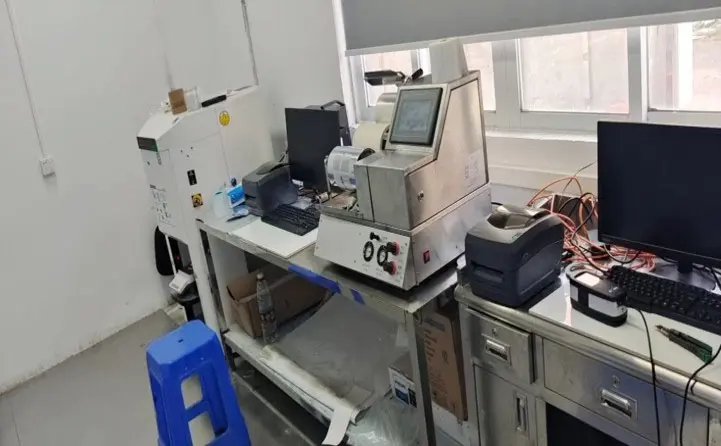
The laboratory color matching and validation system is primarily used for formula R&D and validation. All new colors and formulas must first pass validation in the laboratory and meet standards before they can be mass-produced on the workshop floor.
The ink room batch production system is primarily responsible for the stable, large-scale production of formulas validated in the laboratory and for delivering them to various printing presses.
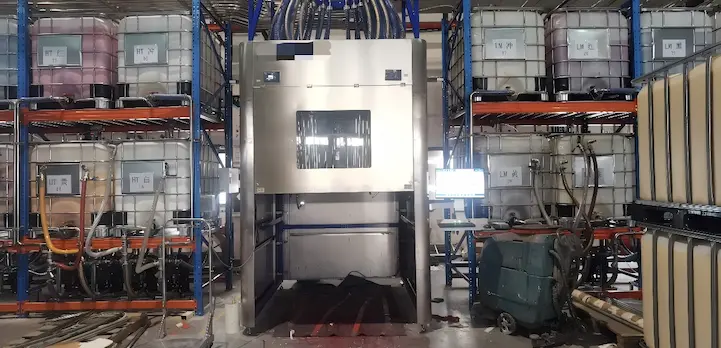
Both components are indispensable and together form a seamless closed-loop process from formula design to mass delivery.
The core tasks of the laboratory are precise color matching and formula validation. Therefore, equipment configuration should be organized around the “color measurement—color matching—color display—validation” workflow.
We typically recommend that clients equip their laboratories with the following devices: gravure proofer, spectrophotometer, automated ink dispensing systems, workbench, computer, D2-ink dispenser, standard whiteboard, disposable paper cups, disposable straws, ink knives, and standard light source.
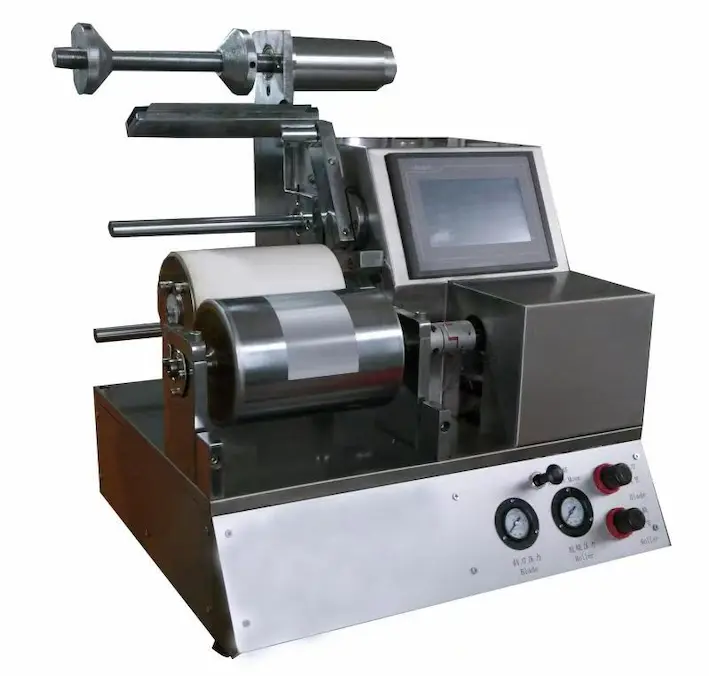
The gravure proofer is one of the most commonly used tools in the laboratory. It is used to create ink swatches, simulate printing results, and ensure color uniformity and reproducibility.
The spectrophotometer is responsible for precisely measuring the Lab values and ΔE data of colors, serving as the basis for color matching and color difference judgment.

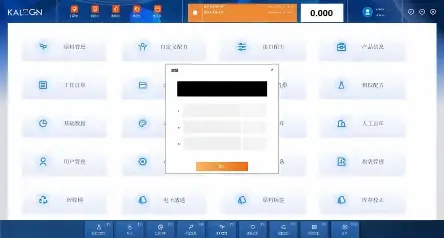
The automated ink dispensing systems is responsible for calculating the formula based on the measured data, performing color correction, and conducting archive management.
The workbench is recommended to have a glass or stainless steel countertop for easy cleaning. When ink gets on it, it can be wiped off easily.
Computers are used to run color matching software and store data.
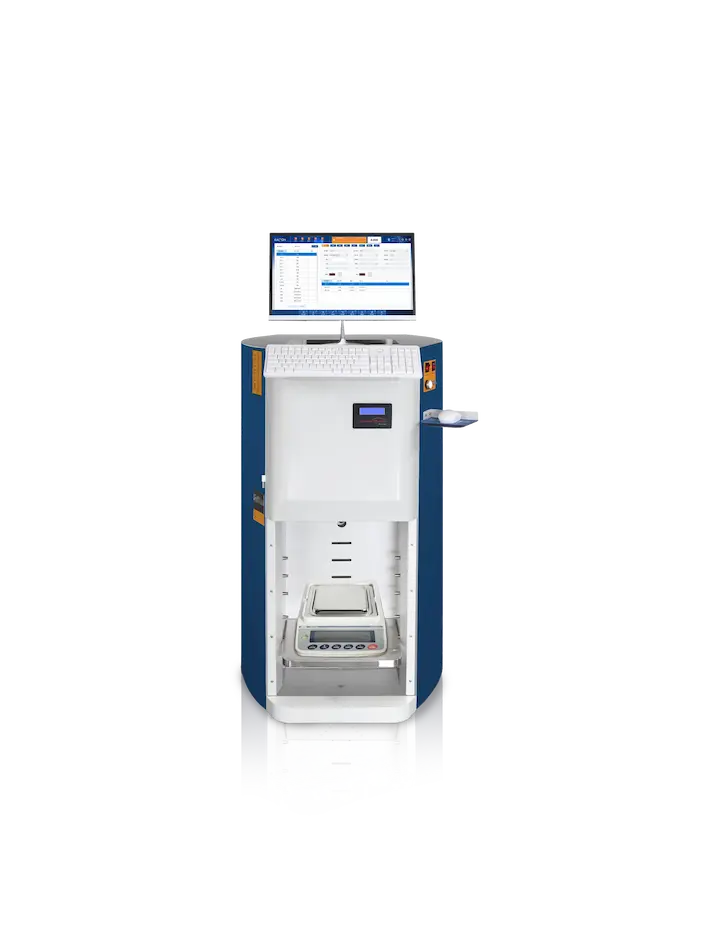
The D2-INK dispenser can automatically complete the preparation of small batches of ink according to the formula, reducing the error of manual weighing.
The standard white board (white tiles) is used for the daily calibration of spectrophotometers.
Disposable paper cups, disposable straws, and ink knives are all consumables in daily operations. They are cheap and easy to use, and are thrown away after use, eliminating the trouble of cleaning.

The standard light source is used to ensure consistency in color observation under different light conditions.
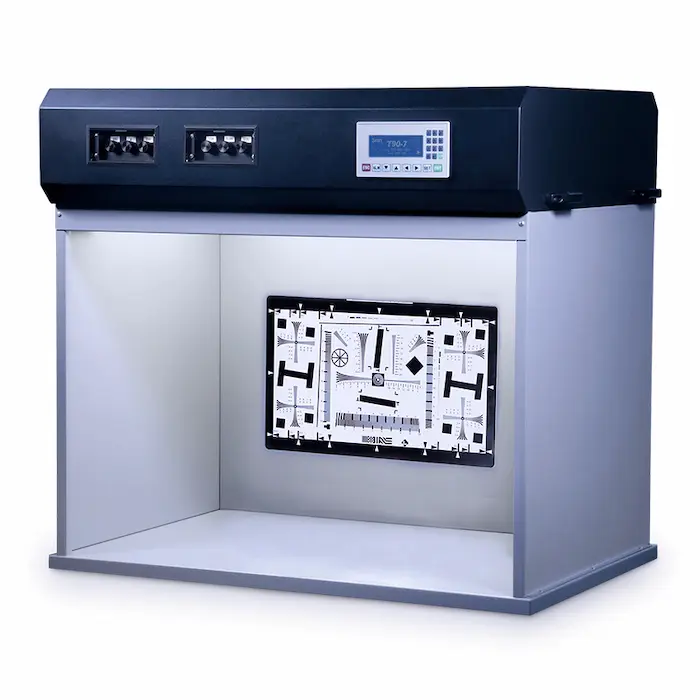
This set of configurations seems to have a lot of things, but each one has its irreplaceable role. Without any of them, the accuracy and efficiency of color matching will be greatly reduced.
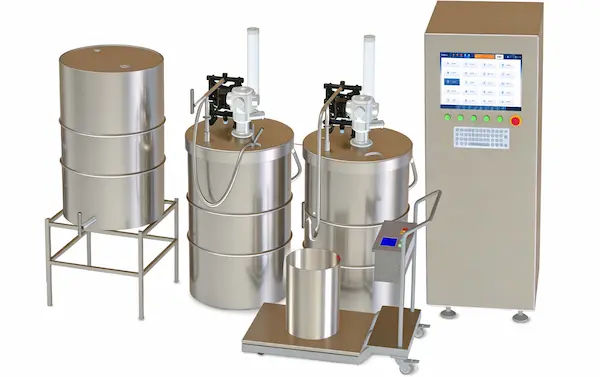
The ink room is like a factory workshop. Its function is to carry out batch production based on the formulas verified in the laboratory. Therefore, the equipment is more focused on production capacity and efficiency. It mainly includes an automatic ink dispensing machine and stainless steel transfer tanks.
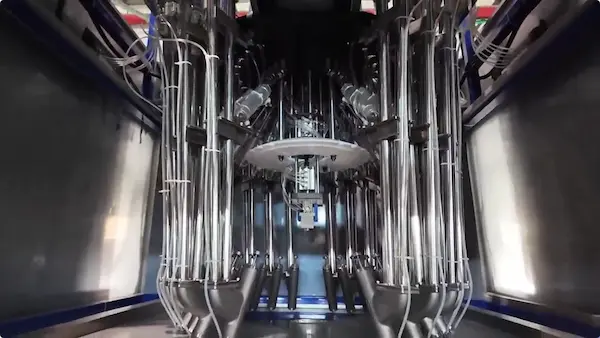
The automatic ink dispensing machine is the core equipment of the ink workshop. It can handle multiple formulas and multiple colors simultaneously for batch preparation, significantly enhancing production efficiency.
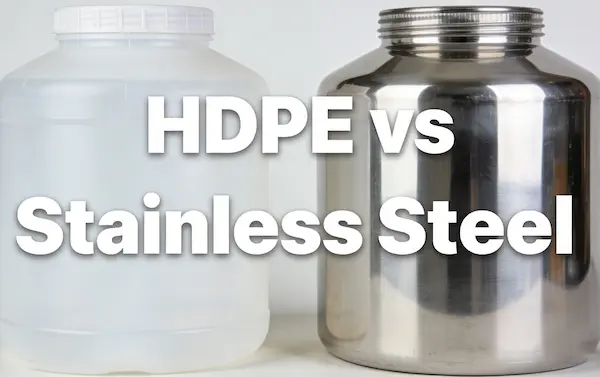
The stainless steel transfer tanks are mainly used to store the prepared spot color inks, facilitating their transfer to various printing machines for use.
The equipment in the ink workshop is relatively limited, but the requirements for operational standardization and data accuracy are much higher. All the formulation records, batch information, and weight data need to be synchronized with the automated ink dispensing systems in real time.
Purchasing the automated ink dispensing systems does not mean that the system will be used effectively and produce results. Based on our experience, the on-site implementation usually consists of the following five steps:
This is the most fundamental and important step. All basic color data and the spectral information of the target color must be entered into the automated ink dispensing systems to form an exclusive color difference database. With this database, subsequent color matching and color correction will have a basis. At the same time, every verified new formulation must be established as an electronic file to facilitate subsequent search and retrieval.
Many printing workshops have many leftover ink buckets, and over time, the color in the buckets may be forgotten. Eventually, they can only be treated as waste. By entering the spectral data of the residual ink into the system, rapid and accurate retrieval can be achieved, allowing the residual ink to be truly reused.
There will always be differences between the display conditions in the laboratory and the actual production conditions of the printing machine. Through continuous comparison and calibration, the display data and production data can be aligned to continuously optimize the standard for color difference control.
The training should cover the entire process from system login, formula retrieval, color matching operation to data entry, ensuring that front-line personnel can master it proficiently.
The functions of the automated ink dispensing systems are relatively professional, involving spectral analysis, formula calculation, and color correction logic, and require specialized training. The goal of the training is to enable laboratory personnel to independently complete the development and verification of new formulas.
Our system has many valuable features. Based on our customer feedback, we have summarized the following points:
First, the system significantly increases the rate of machine startup. In the traditional mode, when spot colors are loaded onto the machine, they often require repeated adjustments. The machine operators spend a lot of time adjusting the ink, while the printing machine is running but not working. Every minute is a cost. The automated ink dispensing systems can achieve 85% or more of spot colors being qualified on the first startup, significantly reducing the time for machine ink adjustment and material waste.
Second, accurate formula production reduces the generation of leftover ink. Traditional manual ink mixing has poor accuracy, large color differences, and much waste. The automated ink dispensing systems realize on-demand production and accurate feeding, which not only ensures the accuracy of the formula, but also reduces the leftover ink caused by excessive preparation.
Third, efficient management and handling of leftover ink. Leftover ink is no longer a burden, but a resource that can be reused. The system can automatically search and match the existing leftover ink to prepare new colors, and control the leftover ink inventory to the lowest level.
Fourth, connect with the ERP system to realize refined order management. The automated ink dispensing systems support combined production and batch retrieval of leftover ink, which greatly simplifies manual operation.
Fifth, accurately calculate the cost of ink. The automated ink dispensing systems can automatically calculate the ink consumption of each order and automatically upload the ink consumption. Financial personnel can accurately calculate the ink cost of each order and achieve real refined cost management.
The automated ink dispensing systems require a standard operating procedure. To provide an intuitive understanding of daily use, we have described the process in the simplest terms:
Measure the target color and verify the formula. If the color difference of the formula does not meet requirements, click the “Color Correction” button in the automated ink dispensing systems to perform automatic color correction. Continue correcting until the color difference meets requirements, then save the formula.
Retrieve the corresponding formula from the automated ink dispensing systems, click the “Dispensing” button, enter the required production quantity, and the system will automatically complete batch dispensing while printing a production label.
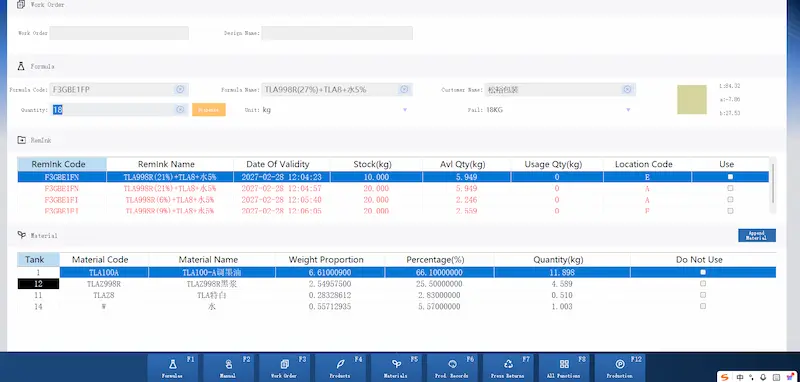
The prepared spot color ink is transported to the printing press via transfer drums for use.
After printing is complete, the leftover ink is returned to the ink workshop for recycling. There are two recycling methods: scan the production label to automatically retrieve the recycling formula, or manually search for the production formula. The system automatically assigns a storage location for the leftover ink; click the “Weigh” button, and the system automatically records the weight of the leftover ink while simultaneously saving the spectral data for that formula, facilitating future reuse.
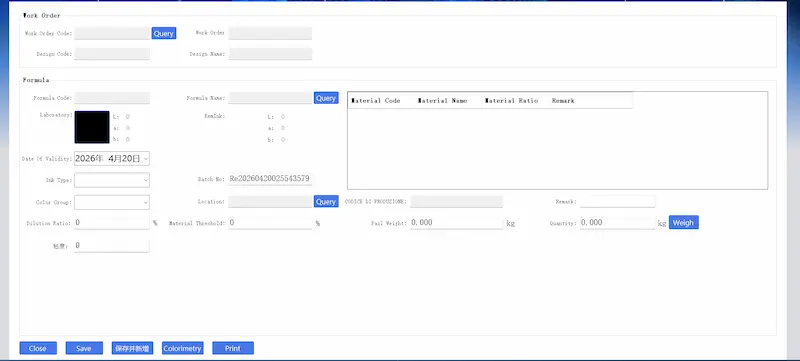
An automated ink dispensing systems cannot be used immediately after purchase; it requires training by specialized personnel before it can be operated effectively. Although the initial investment of time may be significant, in the long run, it can improve efficiency and reduce costs for your business.
If your factory still relies on the experience and intuition of veteran technicians to mix ink, or if your ink workshop is still piled high with large amounts of unusable leftover ink—it’s time to learn more about automated ink dispensing systems. If you need more information, please feel free to contact us; we’re always here to help.