In the day-to-day production of coatings, inks and paints, the use of automatic dispenser machines is becoming increasingly widespread. Not only do they significantly improve color-matching efficiency, but their high-precision metering systems also ensure that every batch of material produced matches the standard color chart with exceptional accuracy, thereby perfectly meeting customers’ stringent requirements for bespoke colors. However, many users have encountered the following predicament: whilst a customer is standing by the machine inspecting the quality of the finished product, the automatic dispenser machines suddenly experience metering deviations, discharge issues, or even a system crash—at such times, any malfunction means lost orders and damage to the company’s reputation.
In fact, the stability of automatic dispenser machines does not depend solely on their factory quality, but relies even more on scientific and systematic maintenance and care thereafter. Factors such as the build-up of paint residue, wear and tear on machine components, and ageing electrical parts can all reduce the equipment’s precision and service life. Only by establishing a comprehensive maintenance programme covering “daily, monthly, quarterly and annual” intervals, and by mastering the correct cleaning techniques for different machine models, can automatic dispenser machines be kept in optimal condition over the long term.
Automatic dispenser machines require regular maintenance to extend their service life and ensure smoother operation. This is not a task to be carried out just once a year, but rather requires daily, monthly, quarterly and annual maintenance.
Clean the surface of the machine by wiping the casing, control panel and mixing drum with a clean, damp cloth to remove surface dust, paint stains and debris. For stubborn stains, a mild cleaning agent may be used, but care must be taken to prevent the agent from entering the interior of the machine.
1) Check Sensors and Probes
Clean dust and paint stains from the surfaces of sensors and probes, and check their sensitivity and accuracy. If they are dirty or damaged, they should be cleaned or replaced promptly to ensure the automatic dispenser machines can accurately detect the color and composition of the paint.
2) Lubricate all components
Apply an appropriate amount of lubricating oil or grease to all machine components, such as bearings and gears, to reduce wear and ensure smooth operation.
3) Comprehensive inspection of the electrical system
Check that all electrical connections are secure and free from looseness, damage or ageing. Verify that electrical components are functioning correctly and check for any abnormalities such as overheating, unusual odours or sparking. Should any issues be identified, a qualified electrician should carry out repairs or replacements.
1) Component Replacement: Replace aged pipework, seals and wear parts. For the pneumatic system, service solenoid valves and pressure regulators, and replace filter elements.
2) Complete Machine Inspection: Have a qualified technician test the equipment’s pressure, flow rate, and repeatability. Back up formulations in the computer system, and reinstall the system or upgrade the software.
Many factories take their color making machines out of service for extended periods during the off-season or holidays, but often only discover frequent malfunctions—or even that the machine is inoperable—when they restart it. In fact, prolonged periods of non-use represent a crucial window of opportunity for maintenance. The following measures should be taken during such periods:
1) Thoroughly clean the machine
In accordance with deep-cleaning requirements, thoroughly clean all components of the color making machine, drain and clean the color paste tanks, and ensure there are no paint residues.
2) Apply protective oil
Apply a layer of anti-rust oil to the machine’s metal components to prevent rusting.
3) Cover to protect against dust
Cover the color making machine with a dust cover or plastic sheeting to prevent dust and debris from entering the machine’s interior.
4) Periodic power-up checks
Even if the machine is not in use for an extended period, it should be powered up and run at regular intervals to check that it is functioning normally and to prevent electrical components from being damaged by moisture.
The discharge port (also known as the metering valve port) is the most critical working area of the automatic dispenser machines, and it is also the part where residual material is most likely to dry out and cause blockages. Different types of material and different machine designs require different cleaning methods.
3.1 D2-INK Automatic Dispenser Machines
There are two cleaning methods for this type of color-making machine.
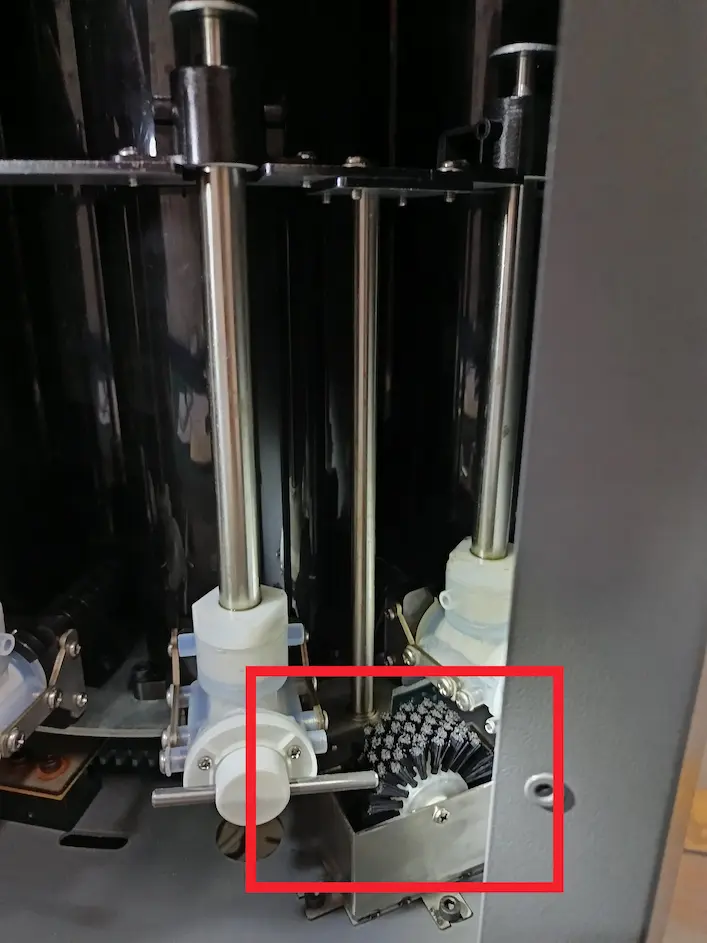
Method One: There is a removable small box on the side of the machine, containing a roller sponge. Pour an appropriate amount of thinner or ethyl acetate into the box to allow the sponge to fully absorb the solvent. After dispensing, the discharging port will automatically pass over the sponge, using friction to wipe away any paint residue from the valve surface.
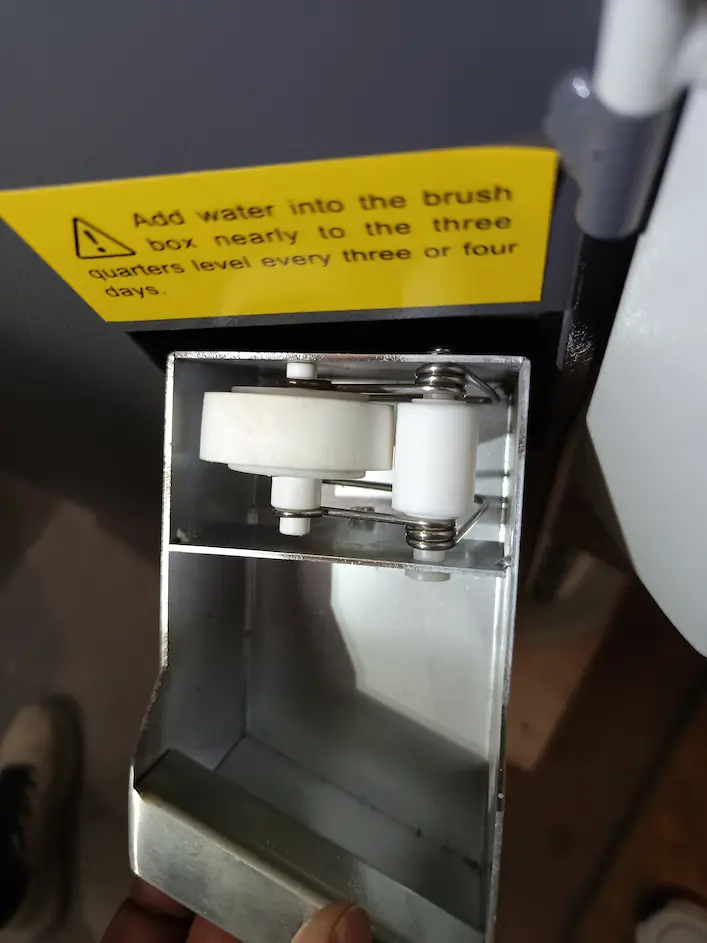
Method 2: There is a small brush at the rear of the machine. When the outlet rotates to this position, the small brush will thoroughly clean away any material residue not removed by the sponge.
3.2 DM Series Automatic Dispenser Machines
The DM Series color making machine is fitted with a white PTFE (polytetrafluoroethylene) hose next to the discharge valve, which is static-dissipative and offers a high level of safety. Upon completion of each dispensing cycle, the machine automatically initiates a cleaning programme, eliminating the need for manual intervention.
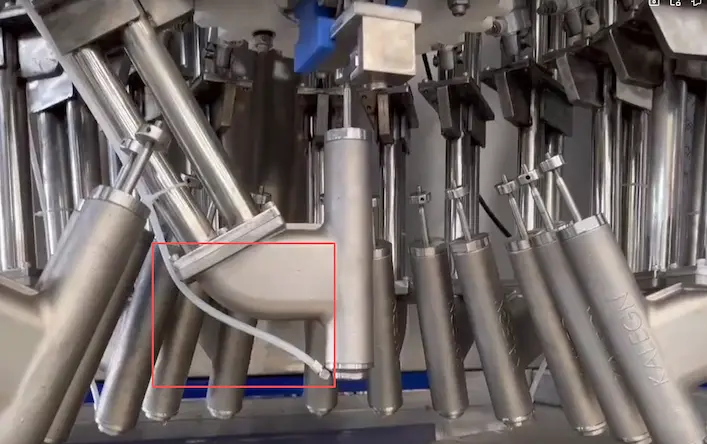
The hose sprays solvent (the same solvent used for routine cleaning in the factory) to high-pressure wash the exterior of the valve, dissolving and flushing away any residual material. Once the flushing is complete, droplets may remain on the surface of the valve outlet. At this point, the machine’s built-in pneumatic valve opens automatically, and high-pressure air is blown through the hose to thoroughly disperse and dry the water droplets, ensuring that no solvent is mixed into the color paste during the next dispensing cycle.
Special note: If water-based materials are used in the workshop, simply rinse with clean water.
3.3 DF-M Dispenser Machines
If the factory uses water-based materials, the machine does not need to be equipped with a cleaning function. If the factory wants to clean the color-making machine, workshop staff may simply wipe the discharge port with a damp cloth.
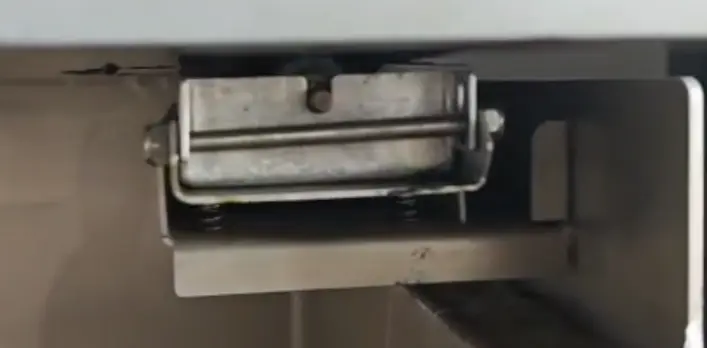
If the factory uses solvent-based materials, the machine will be fitted with a cleaning tray linked to the weighing platform, containing a roller and a sponge. Pour the solvent into the cleaning tray; when the weighing platform is pulled outwards, the cleaning tray moves outwards in unison, and the sponge and roller inside the tray will come into contact with the valve port, completing the wiping and cleaning process as they move.
3.4 DC-X and DC-1 Automatic Dispenser Machines
These two color-making machines are stand-alone units that do not require a dedicated cleaning mechanism; however, care should be taken during daily maintenance to wipe the external valve nozzles with a soft cloth to prevent color paste from forming a crust and blocking the valve openings.
The maintenance of automatic dispenser machines is vital; however, improper operation during maintenance may result in damage to the equipment at best, or cause safety incidents at worst. Please bear in mind the following strict prohibitions:
It is strictly forbidden to mix different types of color pastes or cleaning agents: water-based and solvent-based materials, polyurethane and acrylic, ester solvents and ketone solvents, etc. Mixing these may result in gelation, precipitation, or exothermic reactions, which not only block the pipework but may also corrode seals and even produce toxic gases. Before changing the color paste system each time, the pipework must be thoroughly cleaned using a dedicated cleaning solution.
Shut down the machine immediately in the event of any abnormalities: Should you hear unusual noises (such as sharp grinding or impact sounds), notice oil or color pastes leaks, or observe a significant deterioration in weighing repeatability (exceeding the permitted tolerance of ±1g), you must stop using the machine immediately and contact after-sales support to report the fault. Under no circumstances should you continue dispensing material, as minor faults may rapidly escalate into irreversible damage.
Strictly controlled storage environment: The automatic dispenser machines should be installed indoors at a temperature of 5–35 °C and a relative humidity of ≤80 per cent, away from heat sources, water sources and strong electromagnetic interference. Avoid direct sunlight on the control panel (to prevent LCD ageing) and ensure the machine is placed on a level and stable surface.
Conclusion: Maintenance is the most cost-effective investment in productivity
An automatic dispenser machine is not a “buy once, worry never” unit, but rather a precision instrument that requires careful attention. From daily cleaning to monthly lubrication, from quarterly component replacement to rust prevention and power-on maintenance during long-term storage, every step is designed to extend the service life of the color making machine.
There’s much more to automatic dispenser machine maintenance than what’s covered here, and different models require different care methods. If you’d like to learn more, or have any questions about the maintenance of a particular model, please feel free to contact us. We’ve always been here.