The North American automotive refinish paint market is characterized by its stringent quality control and compliance demands. Among these, the U.S. Food and Drug Administration (FDA) standards for indirect food-contact materials serve as a critical, non-negotiable barrier to entry. Since refinish paints often come into indirect contact with vehicle interiors or areas used for food transport, their filling equipment must rigorously adhere to FDA regulations concerning material safety, process hygiene, and full traceability.
Many businesses encounter setbacks by overlooking FDA compliance during equipment selection, leading to issues like leaching of harmful substances from contact parts or contamination due to poor design. This can result in costly product recalls or market exclusion. Data indicates that over 30% of compliance-related import challenges for automotive refinish paints in North America stem from non-compliant filling equipment. Furthermore, the market mandates adherence to Environmental Protection Agency (EPA) VOC emission limits and Underwriters Laboratories (UL) explosion-proof standards, adding layers of complexity to the selection process.
This guide, based on North American regulatory frameworks and the unique properties of automotive refinish paints—such as high viscosity, multi-component formulations, and diverse color ranges—systematically breaks down the selection of FDA-compliant equipment. It covers core regulations, key design considerations, tiered configuration options, and common pitfalls to help businesses securely unlock the North American market.
1. The North American Compliance Framework:FDA Standards & Related Regulations
Selecting filling equipment for refinish paints requires a “compliance-first” approach, simultaneously meeting FDA standards, environmental laws, and safety regulations. Understanding this framework is the essential first step.
1.1 Core FDA Standards for Coating Contact (21 CFR Parts 175-177)
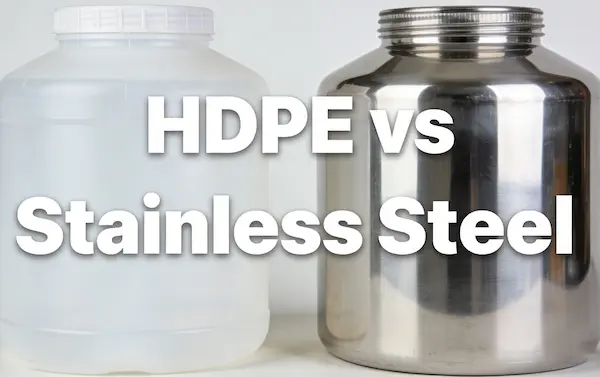
Material Compliance: All parts contacting the paint (e.g., filling nozzles, piping, valves, buffer tank interiors) must utilize FDA-approved materials. Permissible options include 316L stainless steel, PTFE (polytetrafluoroethylene), and food-grade silicone rubber. Materials containing BPA, heavy metals (like lead or cadmium), or uncertified plasticizers must be avoided.
Extractables Limits: Under simulated use conditions (40°C for 24 hours), total extractables from contact parts must not exceed 50 ppm, with heavy metals limited to ≤1 ppm. This prevents paint from failing FDA indirect contact tests.
Process Hygiene: Equipment must prevent paint residue accumulation, microbial growth, and impurity ingress. A dead-end-free design is crucial, coupled with support for Clean-in-Place (CIP) systems. Post-cleaning residue should be ≤0.01 g/cm² to prevent cross-contamination.
1.2 Related Mandatory Regulations (Essential for Market Access)
EPA Environmental Rules: Filling equipment for solvent-based paints must limit unorganized VOC emissions to ≤15 g/L (per EPA 40 CFR Part 63), necessitating closed designs with VOC recovery systems. Equipment for water-based paints requires integrated wastewater collection to prevent soil contamination.
UL/ATEX Explosion-Proof Standards: The flammable vapors generated during solvent-based paint filling mandate equipment certification—UL Class I Division 2 for North America or ATEX IIB T4. Motors and electrical components must carry appropriate Ex d IIB T4 ratings.
Traceability: Equipment must automatically log batch data (including raw material batches, filling time/parameters, operator) and retain records for a minimum of two years to facilitate FDA audits and potential recalls.
1.3 Additional Equipment Demands from Paint Characteristics
High Viscosity Handling: Refinish paints typically have viscosities of 3000–8000 CPS (solvent-based) or 5000–12000 CPS (water-based). Equipment must ensure stable, pulseless flow to avoid uneven filling or clogging.
Multi-Color Compatibility: With thousands of color variants, equipment must enable fast batch changeovers (≤15 minutes) and thorough cleaning to prevent cross-color contamination.
Filling Accuracy: Small containers (0.5L–5L) require a filling error ≤ ±0.2%; larger containers (20L–200L) require ≤ ±0.5% to comply with North American FTC (Federal Trade Commission) regulations.
2. Material & Structural Compliance: Building an FDA-Recognized Weigh Filler
Material selection and structural design are pivotal in determining whether equipment meets FDA extractables and cleanliness requirements.
2.1 Material Compliance: Non-Negotiable FDA-Approved Components
Businesses must verify both material certifications and real-world performance data.
Contact Part Requirements:
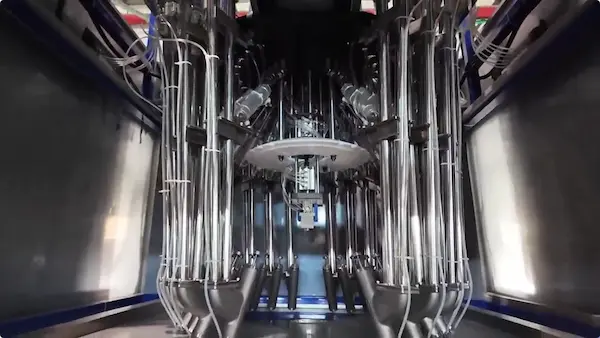
Filling Nozzles, Piping, Buffer Tanks: Use 316L stainless steel (compliant with FDA 21 CFR Part 177.2600) for its corrosion resistance and non-leaching properties, suitable for both solvent and water-based paints.
Seals (Valve Gaskets, Pipe Seals): Opt for FDA-certified food-grade silicone or PTFE. Avoid standard rubber, which may leach plasticizers.
Filters: Employ FDA-approved stainless steel mesh filters (50μm accuracy) to prevent fiber shedding into the paint.
Verification: Suppliers must provide FDA material compliance statements (e.g., for 316L) and third-party extractables test reports covering heavy metals and organic compounds.
2.2 Structural Design: Dead-End-Free, Easy-Clean, Contamination-Prevention
Design must integrate FDA hygiene mandates with the realities of paint handling.
Dead-End-Free Architecture:
Utilize 60° cone-bottom buffer tanks to prevent residue buildup. Internal surfaces should be polished to Ra ≤ 0.8μm to minimize adhesion.
Replace right-angle elbows with 45° bends; eliminate blind pipes and valve dead volumes to ensure cleaning fluid contacts all surfaces.
Incorporate anti-drip filling nozzles with elastic seals to prevent contamination from residue or dripping.
CIP (Clean-in-Place) Systems:
Follow FDA-recommended sequences: “Caustic wash (food-grade NaOH) → Water rinse (deionized) → Disinfection (food-grade peroxide) → Air dry.” Maintain flow velocity ≥1.5 m/s to achieve residue ≤0.01 g/cm².
Automatically log all cleaning data for audits. Integrate automated cleaning cycles triggered during batch changeovers (≤15 minutes).
Anti-Contamination Features:
Implement nitrogen blanketing in buffer tanks during filling to prevent paint oxidation or microbial growth.
Install negative-pressure dust collectors in the filling zone to exclude external impurities.
3. Customized Filling Solutions: Addressing High Viscosity & Multi-Color Demands
Refinish paint production requires a balance between compliance, efficiency, and quality. Customized filling equipment achieves this by adapting to specific viscosity, accuracy, and color-change needs.
3.1 High Viscosity Solutions
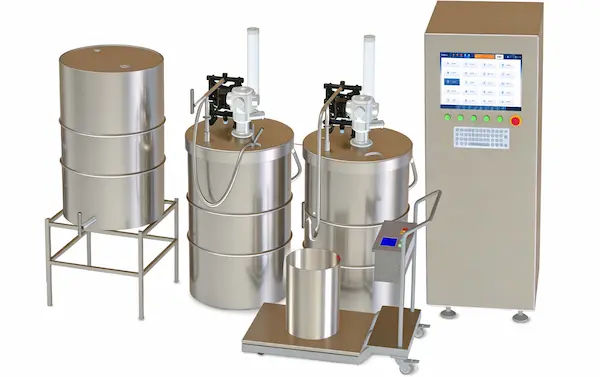
Use FDA-compliant screw pumps to deliver stable pressure (0.3–0.5 MPa) and handle viscosities from 3000 to 12000 CPS without pulsation.
Integrate pipe heat tracing systems (maintained at 25±3°C) to reduce flow resistance of high-viscosity paints and prevent product degradation.
3.2 Precision Control Strategies
Select high-accuracy weigh fillers (±0.1%), whose measurement is independent of viscosity or density changes, easily meeting FTC requirements.
Employ dual load cells for real-time error calibration. The system should pause and alarm if errors exceed ±0.2%.
3.3 Rapid Changeover & Production Flexibility
Maintain a database for 1000+ formulas allowing one-click recall, eliminating recalibration for different colors or container sizes.
Utilize modular filling heads that can be swapped in ≤5 minutes, accommodating containers from 0.5L to 20L.
Custom solutions avoid the inefficiencies of one-size-fits-all equipment, maintaining FDA compliance while matching actual production rhythms.
4. Environmental & Safety Compliance: Integrating EPA/UL Requirements into Automated Systems
North America places equal emphasis on environmental and safety regulations. An automated filling system must seamlessly integrate EPA VOC controls and UL explosion-proof design for comprehensive market access.
4.1 EPA Compliance Integration
For solvent-based lines: Implement closed designs with VOC recovery hoods (e.g., activated carbon adsorption) to achieve emissions ≤10 g/L, surpassing EPA limits.
Equip systems with ≥10L leak-proof drip trays to contain spills, complying with EPA hazardous waste management rules.
4.2 UL Explosion-Proof Design
Utilize UL Class I Division 2 certified motors and control cabinets, with fully sealed circuits to prevent ignition of flammable vapors.
Incorporate overload protection, emergency stop buttons, and pressure alarms, aligning with OSHA safety protocols.
4.3 Advantages of Intelligent Automated Systems
Automatically switch operational modes based on paint type: activating VOC recovery for solvents, and wastewater collection for water-based paints.
Provide real-time monitoring of VOC levels and safety status, with automatic shutdown in case of anomalies to eliminate compliance risks.
5. Smart Traceability: Leveraging Auto Fillers for FDA Audit Preparedness
FDA audits demand complete, verifiable production data. An auto filler machine equipped with smart tracking ensures every batch is fully traceable, significantly reducing compliance risk.
5.1 Data Collection & Storage
Automatically record filling parameters (weight, speed, cleaning cycles), raw material details (batch number, supplier), and operator information.
Store data locally and via cloud backup for a minimum of two years. Implement tamper-proof logging to meet FDA’s “unalterable record” requirement.
5.2 Automated Report Generation
Generate comprehensive compliance reports with one click, attaching necessary FDA documentation (material certs, extractables tests).
Export reports in PDF/Excel formats. Customize report templates to address specific regional regulations (e.g., additional California requirements).
5.3 Benefits of Auto Fillers for Traceability
Eliminate human error associated with manual data entry.
Accelerate recall responses: Identify affected batches within minutes, minimizing financial and reputational damage.
6. Tiered FDA-Compliant Configurations: Matching Your Enterprise Scale
Businesses of different sizes have varying budgets and capacity needs. The following tiered configurations balance compliance with cost-effectiveness.
6.1 Basic Package ($22k–$45k): Entry-Level Compliance
Core Features: 316L stainless steel contact parts, single-head weigh filler (±0.2% accuracy), manual CIP, basic UL-explosion-proof motor.
Ideal For: Small businesses (annual capacity ≤500 tons), focusing on water-based paints and regional markets (e.g., U.S. Midwest, Canada) with limited budgets.
Compliance Outcome: Meets basic FDA/EPA requirements; filling error ≤±0.2%; VOC ≤15 g/L. Suitable for initial audit compliance.
6.2 Standard Package ($45k–$120k): Balanced Compliance & Efficiency
Core Features: 316L + PTFE contact parts, 2-4 head weigh filler (±0.1% accuracy), automated CIP, UL explosion-proof certification, VOC recovery (≥90% efficiency), basic MES integration.
Ideal For: Medium businesses (500-2000 tons/year), handling both solvent and water-based paints, targeting the full North American market including California.
Compliance Outcome: Full FDA/EPA compliance; increases capacity by ~50%; batch changeover ≤15 minutes. Ready for routine audits.
6.3 Premium Package ($120k+): Large-Scale/High-End Market Focus
Core Features: Hastelloy + PTFE contact parts, 4-8 head high-precision weigh filler (±0.05% accuracy), automated CIP with residue sensors, UL explosion-proof + anti-static design, VOC catalytic combustion (emissions ≤5 g/L), advanced MES.
Ideal For: Large enterprises (≥2000 tons/year), producing for luxury automotive segments or OEMs, targeting the most stringent North American markets.
Compliance Outcome: Minimizes FDA compliance risk to near zero; can double production capacity; meets California’s strictest regulations.
7. Common Selection Pitfalls & How to Avoid Them
Pitfall 1: Relying solely on material certificates, neglecting finished-equipment extractables testing. Poor welding or polishing on even 316L parts can cause leaching. Solution: Insist on comprehensive extractables test reports for the complete assembled unit.
Pitfall 2: Compromising on EPA-compliant components. Low-cost VOC systems often fail under stringent audits like those in California. Solution: If targeting California, invest in advanced solutions like catalytic combustion.
Pitfall 3: Overlooking North American-specific voltage and explosion-proof standards. Equipment rated for 220V or仅有 ATEX certification is not sufficient. Solution: Ensure equipment is configured for 110V and carries UL Class I Division 2 certification.
Pitfall 4: Lack of local technical support. Equipment downtime in North America requires swift resolution. Solution: Prioritize suppliers with established service centers in the U.S. and Canada.
8. Case Study: Medium-Sized Manufacturer’s Successful Market Entry
A medium-sized refinish paint producer (annual capacity: 1200 tons) aiming for North American market access implemented the Standard Package configuration.
Results Achieved:
Successfully passed FDA and CARB (California Air Resources Board) audits.
Increased shift capacity by 80% (from 500L to 900L).
Maintained filling accuracy at ≤ ±0.08%.
Reduced material waste from 8% to 3%, achieving annual cost savings of approximately $42,000.
Conclusion
Compliance is not a barrier but the key to unlocking North America’s multi-billion dollar refinish paint market. Through strategic selection and tiered investment in the right filling equipment, businesses can build a compliant, efficient, and reliable production foundation for sustainable growth in the region.
Ready to explore FDA-compliant filling solutions tailored to your production needs?