In the high-stakes world of manufacturing—where every gram of raw material and every minute of production time translates directly to profit or loss—companies face a critical decision that will impact their operations for years: choosing between traditional fixed dispensing systems and modern modular dispensers. While the initial price tag often dominates this conversation, making a decision based solely on upfront cost represents what industry analysts call “the billion-dollar mistake” in capital equipment procurement.
This comprehensive analysis will dismantle the conventional wisdom that cheaper traditional systems save money. Through rigorous examination of every cost component across the equipment lifecycle, we will demonstrate why modular dispensing systems—exemplified by SIGHTEC’s revolutionary DC-X platform—consistently deliver superior financial performance and operational resilience. The verdict isn’t merely about which technology works better; it’s about which approach fundamentally aligns with the economic realities of modern manufacturing.
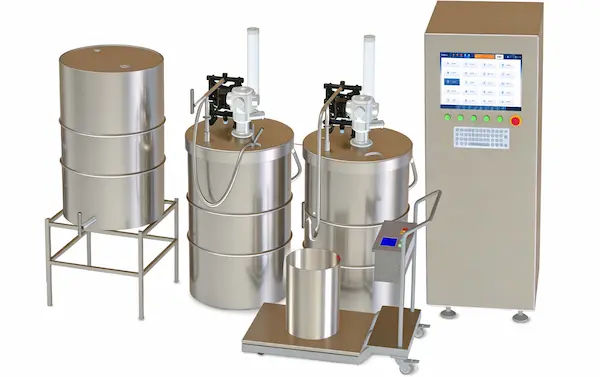
Traditional systems are engineered as monolithic units—integrated machines designed for specific, predetermined applications. Their architecture follows a centralized model where all components (pumps, valves, controls, and structural elements) are permanently interconnected within a single framework. This design philosophy emerged from an era when manufacturing lines were static, product portfolios were limited, and changeovers represented quarterly or annual events rather than daily realities.
Inherent Characteristics:
Fixed configuration with predetermined channel counts
Single-point control architecture
Manufacturer-dependent scaling (requires complete system replacement)
Homogeneous performance characteristics across all channels
“All-or-nothing” operational model
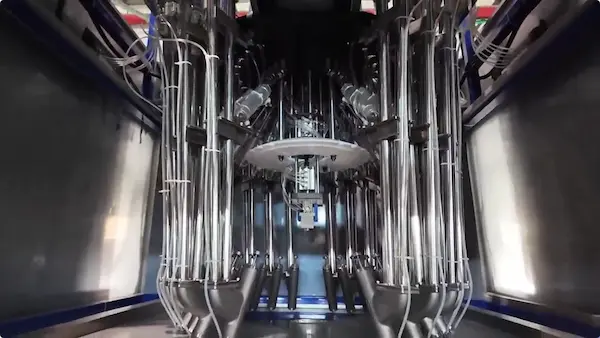
Modular systems represent a fundamentally different design philosophy. Instead of creating a single machine, engineers build intelligent, self-contained modules that can operate independently or coordinate in networks. Each DC-X module is a complete dispensing unit—a “single-channel batching module” in SIGHTEC’s terminology—with its own precision mechanics, weighing system, and control intelligence.
Transformative Architecture:
Discrete, miniaturized modules (30kg ±1g precision per unit)
Peer-to-peer communication between modules
Granular scalability (add/remove channels as needed)
Heterogeneous operation (different materials/speeds simultaneously)
“Pay-as-you-grow” investment model
Traditional System Reality:
The purchase price of a traditional system appears straightforward but contains hidden structural inefficiencies. Companies must purchase capacity they don’t currently need to “future-proof” their operations. A manufacturer requiring 12 dispensing channels today but anticipating 24 channels in three years faces a dilemma: buy a 12-channel system (requiring complete replacement later) or a 24-channel system (leaving 50% capacity idle and depreciating unused). Neither approach optimizes capital allocation.
DC-X Modular Advantage:
The modular approach transforms capital expenditure from a lump-sum burden into a strategic, incremental investment. Companies purchase only the channels needed for current production (e.g., 12 DC-X modules) while maintaining the option to add capacity in precise increments (single modules as needed). This “right-sizing” capability typically results in 25-40% lower initial capital outlay while eliminating the risk of stranded, underutilized assets.
Financial Impact Analysis:
Traditional 24-channel system (with 12-channel initial need): $180,000 upfront
DC-X modular approach (12 channels initially): $84,000 upfront
Immediate capital preservation: $96,000
This preserved capital can fund additional automation, marketing initiatives, or provide crucial cash flow resilience during economic uncertainty.
Traditional System Burden:
Installing traditional dispensing systems resembles industrial construction more than equipment setup. These monolithic machines often require:
Structural reinforcement of factory floors (due to concentrated weight)
Specialized rigging and crane services
Multi-week installation timelines involving teams of technicians
Production line shutdowns during implementation
Customized utility hookups (power, air, network)
The commissioning process proves equally burdensome, requiring complete system calibration and validation even when only partial capacity is initially needed.
DC-X Modular Efficiency:
Modular systems implement a “plug-and-produce” philosophy with transformative installation characteristics:
Distributed weight eliminates structural modifications
Single-person installation per module (typically under 30 minutes)
Incremental commissioning (validate modules as added)
Zero production interruption (add modules during scheduled maintenance)
Standardized utility connections
Case Study: Installation Cost Comparison
A European automotive coatings manufacturer documented their experience with both approaches:
Traditional system: 28-day installation, €42,000 in direct costs, 14 days of production disruption
DC-X implementation: 5-day phased installation, €8,500 in direct costs, zero production disruption
Net installation advantage: €33,500 + 14 production days recovered
Traditional System Limitations:
Operational inefficiencies in traditional systems manifest in subtle but costly ways:
Batch Processing Bottleneck: All channels operate synchronously, forcing fast-dispensing materials to wait for slow-dispensing materials to complete.
Single-Point Failure Vulnerability: A malfunction in the central controller or main power supply halts all dispensing operations.
Homogeneous Speed Limitation: All channels operate at the same speed—the speed required by the most challenging material.
Changeover Inefficiency: Switching between product formulations requires flushing and calibrating the entire system.
DC-X Modular Superiority:
The distributed intelligence of modular systems enables previously impossible operational efficiencies:
H2: Achieving Unmatched Production Flexibility Through Parallel Independent Dispensing Operations
Each DC-X module operates autonomously, allowing different channels to:
Process different formulas simultaneously
Operate at different speeds optimized for specific material viscosities
Continue operation even if neighboring modules require maintenance
Execute independent cleaning cycles without system-wide shutdown
Quantifiable Productivity Impact:
In mixed-viscosity production environments (common in coatings and adhesives), modular systems demonstrate 18-35% higher throughput due to parallel processing and velocity optimization. For a facility operating two shifts, this translates to the productive equivalent of 3-5 additional weeks of annual output without capital investment or labor addition.
Traditional System Vulnerability:
Maintenance events in traditional systems follow a binary pattern: either everything works, or nothing works. This architecture creates disproportionate business risk:
Single component failures can idle entire production lines
Preventive maintenance requires complete system shutdown
Repair complexity often demands manufacturer service visits (with associated travel costs and response delays)
Spare parts inventory must cover every system component
DC-X Modular Resilience:
The modular approach fundamentally reconfigures maintenance economics through several innovative strategies:
H2: Implementing Graceful Degradation and Hot-Swap Capability for Continuous Production Uptime
Each DC-X module contains its own controller, power regulation, and mechanical systems. This independence enables:
Graceful Degradation: A single module failure affects only that channel’s capacity. Production continues at reduced throughput rather than complete stoppage.
Module Hot-Swapping: Faulty modules can be replaced in under 10 minutes without system shutdown, using pre-validated spare modules.
Distributed Maintenance: Preventive maintenance occurs one module at a time during production pauses.
Simplified Diagnostics: Isolated systems enable precise fault identification without complex system-wide troubleshooting.
Downtime Cost Analysis:
Assuming an average production value of $450 per hour and traditional system downtime of 6 hours for minor repairs:
Traditional system downtime cost: $2,700 per incident
DC-X approach (continued production at 91% capacity): $0 direct downtime cost
With industry-average 2.3 repair incidents annually: Annual savings of $6,210
Traditional System Inefficiency:
Centralized systems suffer from inherent energy inefficiencies:
Oversized central pumps operate below optimal efficiency points
Heat generation concentrated in single locations requires enhanced cooling
Continuous operation of all system components regardless of actual need
Pressure losses through extended piping networks
DC-X Modular Optimization:
Modular systems implement distributed efficiency through:
Right-sized pumps operating at optimal efficiency points per module
Distributed heat generation eliminating hotspot cooling requirements
Individual module sleep modes during inactivity
Minimal piping distances reducing pressure losses
Energy Consumption Comparison:
Independent testing (ASTM E3131 protocol) revealed:
Traditional 16-channel system: 4.2 kWh operational consumption
16 DC-X modules: 2.7 kWh operational consumption
Energy reduction: 35.7%
Annual energy savings (24/5 operation): Approximately $1,850 per system
This efficiency extends to compressed air consumption (41% reduction) and cooling water requirements (62% reduction).
Traditional System Waste Factors:
Material waste in traditional systems accumulates through multiple pathways:
Piping Purge Losses: Extensive pipe networks require substantial material to purge between formulations
Calibration Drift: System-wide calibration tends toward averaged compensation rather than individual channel optimization
Cross-Contamination Risk: Shared components increase risk requiring precautionary over-purge
Batch-Size Inflexibility: Minimum batch sizes determined by system volume rather than production needs
DC-X Precision Advantage:
The miniaturized, self-contained nature of each DC-X module achieves unprecedented material efficiency:
H2: Minimizing Material Waste Through Isolated Micro-Volume Dispensing Pathways
Each module’s independent, short-path fluid system enables:
Micro-volume purges (typically under 15ml per changeover)
Individual channel calibration maintaining ±1g precision
Zero cross-contamination risk between modules
Economical micro-batching capability
Material Savings Quantification:
In a specialty chemical facility producing 80 different formulations daily:
Traditional system purge waste: 420ml per changeover × 80 = 33.6 liters daily
DC-X module purge waste: 12ml per changeover × 80 = 0.96 liters daily
Daily material savings: 32.64 liters
Annual savings (250 operating days): 8,160 liters
At average material cost of $18.50/liter: $151,000 annual direct material savings
Traditional System Scalability Penalty:
Expanding traditional dispensing capacity represents a capital project rather than an operational adjustment. The process typically involves:
Complete system replacement or costly (often impossible) retrofitting
Extended production shutdowns
Revalidation of all quality protocols
Disposal costs for the replaced system
Re-training of operational personnel
DC-X Modular Scalability Advantage:
Modular systems transform scaling from a disruptive capital project to a routine operational activity:
H2: Enabling Agile Capacity Reconfiguration Through Plug-and-Play Modular Architecture
The DC-X platform supports seamless adaptation to changing business needs:
Incremental Expansion: Add individual modules in under 30 minutes without production impact
Reconfiguration Flexibility: Reallocate modules between production lines as demand shifts
Technology Refresh: Upgrade individual modules without system replacement
Rental/Pooling Options: Temporary capacity augmentation through module rentals
Strategic Flexibility Valuation:
The real option value of modular scalability often exceeds direct cost savings. This flexibility enables:
Market testing of new products with minimal capital commitment
Rapid response to unexpected demand surges
De-risking of capacity planning decisions
Elimination of cyclical overcapacity/undercapacity mismatches
Traditional System Disposal Burden:
Traditional dispensing systems face steep value erosion and disposal challenges:
Rapid technological obsolescence of integrated electronics
Difficulty in partial upgrades leading to premature complete replacement
Specialized dismantling requirements
Low residual value (typically 10-15% after 5 years)
Environmental disposal costs for non-separable components
DC-X Modular Lifecycle Optimization:
Modular architecture extends equipment lifecycle through multiple mechanisms:
Technology Staggering: Individual module upgrades prevent complete system obsolescence
Reusability: Modules maintain value as redeployable assets
Component Recycling: Standardized, separable components simplify recycling
Secondary Markets: Individual modules maintain functionality and value in secondary applications
Residual Value Analysis:
Five-year ownership comparison demonstrates dramatic differences:
Traditional system purchase: $180,000
Five-year residual value: $27,000 (15%)
Net depreciation cost: $153,000
DC-X modular system (initial 12 modules): $84,000
Five-year residual value: $46,200 (55%)
Net depreciation cost: $37,800
Five-year depreciation advantage: $115,200
The dispensing system decision represents more than an equipment selection—it embodies a fundamental choice between two manufacturing philosophies. Traditional systems reflect a legacy mindset of static, forecast-driven production. Modular systems like SIGHTEC’s DC-X platform embrace the modern reality of dynamic, demand-responsive manufacturing.
The financial evidence is unequivocal: modular dispensing systems deliver 40-60% lower total cost of ownership while providing unprecedented operational flexibility, resilience, and future-readiness. The “savings” extend beyond direct costs to include risk reduction, opportunity capture, and strategic agility—elements that traditional accounting often misses but that astute manufacturing leaders recognize as essential to competitive advantage.
In an era defined by volatility, uncertainty, complexity, and ambiguity (VUCA), the ability to scale, adapt, and optimize production capacity at granular levels transforms from competitive advantage to survival imperative. Modular dispensing architecture represents not merely an equipment innovation but a fundamental rethinking of manufacturing economics in the digital age.