For decades, the heart of color-critical production in printing and coating plants has been the master colorist. With an experienced eye and a skilled hand, they perform a delicate dance of adding pigments, drop by drop, to match a customer’s unique spot color. This process, revered as an art form, is now the single greatest bottleneck to efficiency, profitability, and digital transformation. In an era demanding lightning-fast turnaround, zero-defect quality, and sustainable practices, reliance on subjective “tribal knowledge” is a significant business risk.
The root of the problem is that color has been treated as an art, not a science. The transition from analog intuition to digital precision is the most significant shift these industries face. At the forefront of this revolution is the Automatic Color Matching System—a sophisticated ecosystem of hardware and software that doesn’t just automate the process but fundamentally redefines it through data. This isn’t merely about speed; it’s about building a new, unshakable foundation for color quality control and management.
To appreciate the solution, we must first quantify the problem. The limitations of manual color dispensing create a cascade of operational inefficiencies that strangle profitability.
1.1 The Repeatability Nightmare: “This Doesn’t Look the Same!”
Human expertise is intangible. A formula that exists solely in a technician’s memory cannot be perfectly replicated. A color matched on a Monday might differ slightly when remade on a Friday, or by a different technician. This inconsistency leads to rejected batches, delayed shipments, and damaged client trust. In industries like premium packaging or brand-specific graphics, even a minor ΔE (Delta E) color difference can be catastrophic.
1.2 The Staggering Waste of “Trial and Error”
The manual process is inherently wasteful. Each adjustment creates non-reusable surplus ink or paint. This “tweak and discard” cycle generates tons of waste annually—a direct hit to raw material costs compounded by rising disposal fees. Furthermore, the hours a technician spends in labor and a press sits idle during color adjustment represent a massive loss in potential productivity.
1.3 The Fragile Knowledge Chain
Your most critical color asset—expertise—walks out the door every night. The retirement or departure of a key colorist can create a “brain drain” that sets a company back years. This reliance on individuals makes businesses vulnerable and prevents the scaling of color expertise across multiple shifts or facilities.
An Automatic Color Matching System is not a single machine but an integrated platform. Its power lies in the synergy between its components.
2.1 The Brain: Intelligent Software & The Foundation Database
The core of any effective Automatic Color System is its software, driven by a foundational database. This isn’t a simple library of color swatches. It is a sophisticated repository of the optical properties of every raw material, measured using a Spectrophotometer. This data is processed using the Kubelka-Munk theory, which models how light interacts with pigments, allowing the system to predict mixing outcomes with scientific precision.
The software’s algorithm doesn’t just find a match; it optimizes for it. In milliseconds, it evaluates millions of potential combinations to present formulators with the best possible recipe based on:
Lowest Cost: Selecting the most economical raw material combination.
Minimal Metamerism: Ensuring the color match holds under different light sources.
Best Chemical Compatibility: Avoiding recipe failures.
2.2 The Eyes: High-Precision Spectrophotometer Color Matching
Accuracy starts with measurement. A high-end Spectrophotometer captures a color’s unique “spectral fingerprint”—its reflectance across the entire visible spectrum. This objective data replaces subjective visual judgment as the absolute standard, forming the non-negotiable starting point for the entire Automatic Color Matching System.
2.3 The Hands: Precision Automatic Ink Dispensing Systems
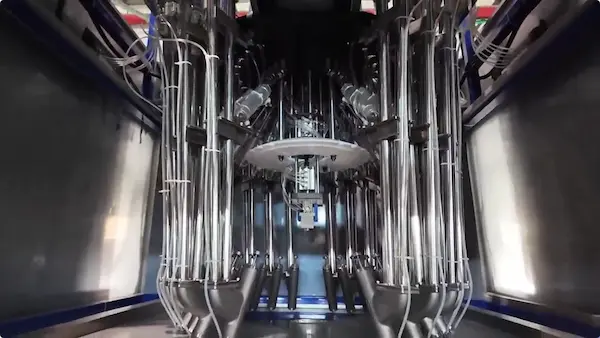
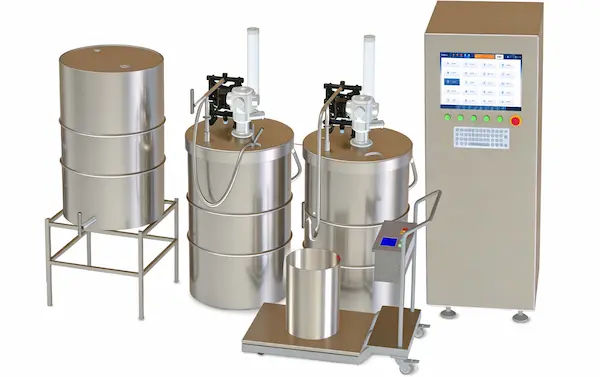
This is where the digital formula becomes physical reality. Automatic ink dispensing systems, also known as Colorant Dispensers, are robotic units that precisely inject pigments, resins, and additives according to the computer’s formula. Operating with milligram-level accuracy, these systems eliminate human error in weighing, ensuring the digital recipe is executed perfectly every time. Whether configured as a centralized fluid dispensing system for a paint plant or a bank of Colorant Dispensers on a printing floor, they deliver raw, measurable consistency.
Implementing an Automatic Color System transforms business operations from a reactive to a proactive, data-driven model.
3.1 Achieve “First-Time-Right” Production
The most significant impact is the elimination of adjustment time on the main production line. By delivering a perfect match at the dispensing stage, the ink dispenser system ensures that the press or coating line can start production immediately. This dramatically increases equipment utilization and overall throughput.
3.2 Slash Waste and Drive Sustainability
An Automatic Color Matching System is a powerful tool for sustainability. By calculating the exact amount of material needed for an order, it enables precise, on-demand production. This “batch-size-one” capability, powered by a paint mixing machine or ink dispenser, drastically reduces ink waste in printing and coating manufacturing. The result is a direct reduction in raw material costs and a smaller environmental footprint.
3.3 Build Your Digital Color DNA
Your successful color formulas become permanent, transferable corporate assets. A robust color data management solution is inherent to these systems. Every formula, along with its spectral data and production conditions, is stored in a centralized digital library. This allows for instant, perfect recreation of any color, at any time, on any production line worldwide, securing your color legacy indefinitely.
3.4 Empower Your Workforce
These systems augment human skill. The technician’s role evolves from a guesswork-intensive artist to a data-savvy operator who manages the system, interprets results, and focuses on exception handling. This elevates the job, reduces stress, and makes the color process less reliant on a single individual.
4.1 Packaging and Label Printing: For brand owners, color is identity. An Automatic Color System guarantees that the iconic red of a soda can or the specific blue of a luxury box is reproduced with absolute consistency across global suppliers and over time.
4.2 Commercial and Industrial Paint Manufacturing: A paint mixing machine integrated with a dispensing system allows for custom, small-batch production directly at the point of sale (e.g., hardware stores) or for large industrial orders, ensuring color fidelity and batch-to-batch uniformity.
4.3 Ink Manufacturing: For ink makers, the system is the core of their R&D and production. It accelerates new formula development and ensures that every batch of ink shipped to a customer meets exacting color standards, building a reputation for unparalleled reliability.
The question is no longer if a company should adopt an Automatic Color Matching System, but when. In the competitive landscapes of printing and industrial coatings, the ability to deliver perfect color, on demand, with zero waste is no longer a luxury—it is a fundamental requirement for survival and growth.
This technology represents a foundational shift from a craft-based operation to a digitally integrated, “color-programmable” smart factory. It is an investment that pays dividends not just in saved materials and labor, but in hardened quality control, fortified client relationships, and the creation of a resilient, future-proof business.
Stop letting color inconsistency drain your profitability and stall your growth. Embrace the precision and efficiency of a data-driven future.
Contact us today to schedule a free, no-obligation consultation and see a live demonstration of our industry-leading Automatic Color Matching System. Our experts will analyze your workflow and provide a customized ROI analysis.
Let’s build the future of color, together.