In the competitive worlds of printing, coatings, and industrial manufacturing, color is not just an attribute—it’s an identity. From the iconic red on a brand’s packaging to the specific hue of an automotive interior, achieving and maintaining color accuracy is paramount. Yet, for decades, the process of color matching and dispensing has been plagued by inefficiencies, inaccuracies, and excessive waste. It has been a domain heavily reliant on manual skill and iterative, costly testing.
This whitepaper explores a transformative shift driven by technological innovation. We will explore how intelligent paint dispenser systems are addressing core industry challenges, enabling a faster, more accurate, and more profitable journey from digital color code to physical product. We will unpack the critical role of these systems in creating a seamless, data-driven workflow that eliminates guesswork and builds a foundation for consistent color quality.
The traditional method of mixing colors manually is a tale of frustration and cost. A technician, armed with experience and a color formula, carefully adds colorants by weight or volume to a base. This process is inherently slow and vulnerable to human error. A misread decimal, a slight tremor, or a misjudged shade can lead to an entire batch being scrapped. The costs compound quickly: wasted raw materials, lost labor hours, and delayed production schedules.
Furthermore, the challenge of consistency is immense. Matching a color exactly today does not guarantee the same result tomorrow. Viscosity, ambient temperature, and subtle variations in raw materials can all alter the final outcome. This lack of repeatability makes it difficult to fulfill orders for the same color over time, damaging client trust and brand integrity.
Modern paint colorant dispensers are engineered specifically to conquer these pain points. They function as the precise, automated hand that executes a digital formula with machine-level consistency.
Key Selling Points of Automated Dispensers:
Elimination of Human Error: By automating the dispensing process, these systems remove the primary source of batch-to-batch variation. The machine follows the digital recipe to the letter, every single time.
Radical Waste Reduction: Precision dispensing means using the exact amount of colorant required. This minimizes overuse and the need for disposal of off-spec batches, leading to direct material cost savings and a greener operational footprint.
Unmatched Repeatability: Once a formula is saved in the system, it can be reproduced indefinitely with perfect fidelity. This ensures that a color mixed today will be identical to one mixed six months from now, guaranteeing brand consistency across all production runs.
Technology in Action: The D2-INK System
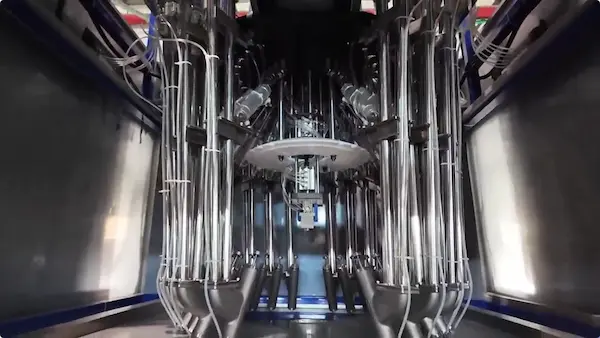
Consider the D2-INK Ink Dispenser as a prime example of this technology. It addresses the core inefficiencies of manual processes head-on. With a minimum injection volume of just 0.02ml, it achieves a level of precision impossible to replicate by hand. Its 16-canister capacity allows for the management of a complex color library, enabling quick verification of both new and old ink formulas. This capability is crucial for operations dealing with solvent-based inks, where accuracy is critical. The optional integration of an electronic balance provides a further layer of verification, ensuring that the volumetric dispensing is perfectly calibrated.
Summary:
The shift from manual mixing to automated paint colorant dispensers is a fundamental leap in quality control. It transforms color formulation from an artisanal craft into a repeatable science, directly tackling the pain points of error, waste, and inconsistency. By investing in this technology, businesses secure a foundation of reliability that protects their bottom line and their brand reputation.
Accuracy in color creation is a non-negotiable requirement. The industry’s move towards digital color management relies on a seamless flow of data from the spectrophotometer (which measures color) to the software (which calculates the formula) to the physical mixing process. Any breakdown in this chain renders the entire system ineffective. The weakest link has often been the manual execution of the formula.
An auto dispenser machine serves as the critical, physical endpoint of this digital workflow. It is the machine that faithfully translates digital instructions into physical reality. The core value proposition lies in its ability to verify and execute with unwavering precision.
The “Best Match” Revolution and Dispensing
As detailed in our foundational analysis, technologies like the “Best Match” function in spectrophotometers are revolutionary. They analyze how a color’s position in the CIEL*a*b* color space shifts with changes in ink density or concentration. This tells an operator precisely how to adjust the mixture—for instance, “increase density by 0.31″—to achieve the smallest possible color difference (dE) without reformulating.
An auto dispenser machine takes this a step further. Instead of just providing advice, it can automatically prepare the adjusted sample. If the software determines that a 15% reduction in a specific colorant is needed for a “Best Match,” the dispenser can execute this adjustment instantly and accurately. This closes the loop between color analysis and color correction, drastically reducing the time and number of iterations needed to achieve a perfect match.
Key Selling Points of Auto Dispenser Machines:
Precise Verification of Formulas: The system can quickly and accurately dispense samples based on a software-generated formula, allowing for physical verification before full-scale production. This is invaluable for checking new colors or assessing the viability of returned ink batches.
Direct Integration with Color Software: These machines act as a hardware extension of color matching software, creating a cohesive ecosystem that streamlines the entire workflow from screen to bin.
Speed and Efficiency: An auto dispenser machine like the D2-INK operates at a dispensing speed of 0.25L/min, enabling rapid prototyping of colors and faster response to production demands. This speed turns lab development from a bottleneck into a competitive advantage.
Summary:
The integration of an auto dispenser machine into the color workflow is the key to unlocking the full potential of digital color management. It ensures that the intelligence of color software is not lost in translation during the physical mixing phase. By guaranteeing formula-perfect results, these machines empower businesses to achieve superior color quality with unprecedented speed and operational efficiency.
The ultimate goal of automation is not just to improve a single task, but to optimize the entire production ecosystem. Standalone machines offer benefits, but the maximum return on investment comes from integrating paint tinting equipment into a unified, smart factory framework. This is where businesses move from solving discrete problems to achieving transformative operational excellence.
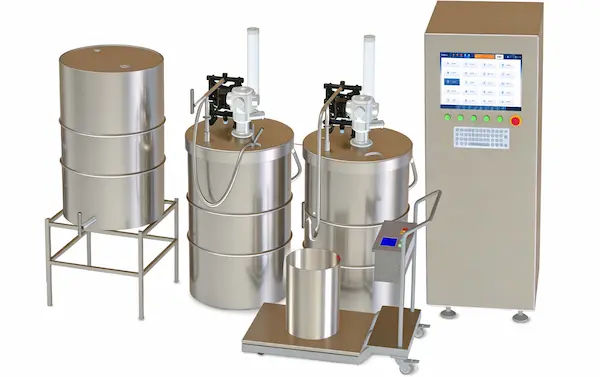
Modern paint tinting equipment is designed with connectivity and scalability in mind. It serves as a central hub in the production landscape, interacting with upstream and downstream systems to create a seamless flow of materials and data.
Solving Workflow Pain Points with Integration:
Pain Point: Inefficient Resource Management.
Solution: Advanced dispensers with multi-canister systems (like the 16-canister D2-INK) allow for centralized management of colorants. This reduces clutter, minimizes the risk of using the wrong material, and provides clear data on colorant consumption for better inventory forecasting.
Pain Point: Lack of Traceability and Data.
Solution: Integrated paint tinting equipment logs every action—every formula dispensed, every volume used. This creates a complete audit trail for quality control. If a batch has an issue, you can trace it back to the exact dispensing run, identifying whether the problem was in the formula, the base material, or the application process.
Pain Point: High Labor Dependency and Skill Gaps.
Solution: By automating the most technically demanding and repetitive part of the process, this equipment reduces dependency on highly skilled technicians for routine tasks. It allows your experts to focus on complex color development and problem-solving, while the machine handles the precise, bulk work. This also makes scaling production up or down much more manageable.
Technical Excellence in Design:
Robust paint tinting equipment is built for the demands of an industrial environment. The D2-INK, for instance, with its net weight of 114kg and sturdy construction, is designed for stability and longevity. Its compatibility with both 220V and 110V power supplies (150W rated power) makes it adaptable to different regional standards, while its compact machine dimension (665x750x1210mm) ensures it fits efficiently into existing production layouts.
Summary:
Viewing a dispenser not just as a tool but as integrated paint tinting equipment is a strategic decision. It is the cornerstone of a lean, data-driven, and highly responsive color production workflow. By streamlining operations from formula to finished mix, this technology drives down costs, enhances quality control, and provides the agility needed to thrive in a fast-paced market.
The evidence is clear: the era of relying solely on manual dexterity for color dispensing is over. The risks of inaccuracy, inconsistency, and waste are simply too great in a world that demands perfection. The adoption of intelligent dispensing technology is no longer a luxury for industry leaders; it is a necessity for any business serious about quality, efficiency, and profitability.
From tackling the fundamental inaccuracies of manual processes with paint colorant dispensers to ensuring digital formulas are perfectly executed with an auto dispenser machine, and finally, to achieving a new level of operational intelligence with fully integrated paint tinting equipment, the path to optimization is well-defined.
These systems represent more than just new hardware—they represent a new philosophy. A philosophy where color is controlled by data, consistency is guaranteed by automation, and your team is empowered to innovate rather than just execute.
Ready to Transform Your Color Dispensing Process?
Stop letting manual errors and inefficient workflows cost you time, money, and client trust. Discover how a precision paint dispenser can be tailored to your specific operational needs.
Contact us today for a personalized consultation and see the D2-INK system in action. Our experts are ready to show you how to achieve perfect color, batch after batch.
Visit our website: www.sightec.net
Email our specialists: bencaig@sightec.net / info@sightec.net
Call us: +86 181 3719 7160
Let’s build a more colorful, precise, and profitable future for your business.