We often notice the signs of industrialization, urbanization, and aesthetics in our daily lives. However, we rarely consider the invisible force that protects and beautifies them—the coatings industry. This industry does more than just add color. It provides a protective shield for industrial equipment, a durable skin for buildings, and a canvas for technological innovation.
As we move through 2025 and look toward 2026, the global coatings market is undergoing a quiet but profound revolution. This article offers a deep dive into the key market trends, growth drivers, and future outlook shaping this vital sector.
A Snapshot of the Market: Steady Growth Meets Structural Shift
The global coatings market currently shows a clear trend: steady overall growth, but with significant changes beneath the surface.
Global Market Expansion: The global surface coatings market, built on a base of approximately $178 billion, is advancing with a robust Compound Annual Growth Rate (CAGR) of around 5.8% toward 2031. Another perspective on the paints and coatings market places its 2025 value at around $211.89 billion. We expect this market to maintain a solid 4.2% CAGR from 2026 to 2035. These figures highlight the industry’s resilience and its ability to navigate different economic conditions.
The Chinese Market: Shifting from Volume to Value: As the world’s largest producer and consumer of coatings, China’s market evolution is highly significant. Industry forecasts suggest China’s coating production volume will grow at a modest 1% to 3% in 2025. However, the main business income from coatings is projected to grow faster, at 3% to 5%. This “value-volume gap” sends a powerful message. The market is moving away from competing on quantity alone. It is now embracing a model built on higher-value, superior-performance products.
Key Takeaway: The market’s growth no longer comes from simply covering more surface area. Instead, it is increasingly driven by technological upgrades that enhance product value. We are witnessing a clear evolution from “painting more” to “painting smarter.”
Key Growth Engines: What is Fueling the Market?
Future growth will not be evenly distributed. It will concentrate in several key areas:
1.Strong Demand from Industrial Sectors:
The New Energy Chain: This sector is creating a rapidly expanding market. It needs anti-corrosion and weather-resistant coatings for solar power stations, specialized coatings for wind turbine blades, and fire-resistant insulating coatings for energy storage systems.Advanced Equipment and Infrastructure: Needs from various sectors create stable demand. This includes heavy-duty anti-corrosion for petrochemical plants in harsh environments, special coatings for robotics and automation equipment, and ongoing demand from continuous urban development.
2.The Dual Drive of Sustainability and Regulation:
Governments worldwide are tightening regulations on Volatile Organic Compound (VOC) emissions. This is no longer just a cost of doing business. It has become a catalyst for market change. Eco-friendly products like water-borne coating, powder, and high-solids coatings are becoming the standard, not just an option. Their market share continues to grow.
3.Consumer-Led Innovation and New Applications:
The automotive industry, especially the electric vehicle (EV) revolution, is creating new demands. These include specialized insulating coatings for battery packs, lightweight body coatings, and advanced aesthetic finishes.
Growing consumer interest in health, aesthetics, and functionality is bringing feature-rich products into homes. These include anti-bacterial, anti-mold, air-purifying, and smart temperature-regulating coatings.
Product and Technology Trends: What Will Future Coatings Look Like?
In 2025 and 2026, coating innovation will revolve around a few key themes:
The “Green” Imperative: This is the dominant, unstoppable trend. Beyond mainstream water-borne technology, research into bio-based materials is gaining momentum. These materials, derived from plants, aim to reduce reliance on fossil fuels and lower the product’s carbon footprint throughout its entire life cycle.
“Smarter” and More Functional Products:
Self-Cleaning Coatings: Using nano-materials, these coatings allow building exteriors and glass to clean themselves with rainwater.
Advanced Protective Coatings: Demands are rising for composite coatings that offer extreme durability and reliability in sectors like aerospace and marine engineering.
Energy-Saving Coatings: Heat-reflective and insulating coatings provide effective solutions for reducing energy consumption in buildings, especially in hot climates.
Intelligent Responsive Coatings: These coatings can change color or properties in response to temperature, humidity, or an electric field. While still emerging, they point to the long-term future of the industry.
The Pursuit of Extreme Performance: In industrial settings, requirements for specific properties are becoming more demanding. This pushes the continuous advancement of special resins, new additives, and sophisticated formulation design.
Navigating Challenges: The Roadblocks Ahead
Behind the optimism, several challenges require attention:
Intense Market Competition: Competition is particularly fierce in market segments with lower technical barriers, like standard architectural and industrial coatings. This leads to a crowded marketplace with similar products, frequent price wars, and severe pressure on profit margins.
Pressure from Cost Volatility: Fluctuations in the price of key commodities like oil directly impact the cost of raw materials. This includes resins, titanium dioxide, and solvents. These changes create ongoing pressure for companies to control costs and stabilize their supply chains.
The Urgency of Technological Evolution: Stricter environmental rules and higher customer expectations force companies to invest constantly in research and development. Businesses that fail to keep up with the pace of technological change risk being left behind.
Regional Hotspots: Where are the Opportunities?
The Asia-Pacific Region: The Global Growth Engine: Without a doubt, the Asia-Pacific region, led by China and India, will continue to drive global market growth. Experts predict this region will account for over 40% of the global market share by 2035. The main drivers are rapid industrialization, continued investment in infrastructure, and growing consumer markets.
The North American Market: A Leader in High-End Segments: Thanks to its global leadership in aerospace, defense, and advanced manufacturing, the North American market maintains a strong presence. It shows particular vitality in high-performance, high-value segments like composite coatings.
The 2026 Outlook and Beyond
Looking ahead to 2026, we believe the coatings industry will continue and deepen the trends we see in 2025.
1. Consolidation and Specialization: The market will likely see further consolidation. Leading companies may grow their share through mergers and technological superiority. At the same time, many smaller, specialized firms that focus on niche markets or possess unique expertise will thrive.
2. Sustainability as a Core Competency: A company’s performance in Environmental, Social, and Governance (ESG) criteria will increasingly influence its brand reputation and market value. Using renewable resources and reducing the carbon footprint of manufacturing processes will become essential practices.
3 .The Rise of Digital and Smart Manufacturing: Technologies like the Industrial Internet of Things (IIoT), big data, and artificial intelligence will become more integrated into coating production. This will enable precise inventory management, quality control, and customized production, leading to greater efficiency and lower costs.
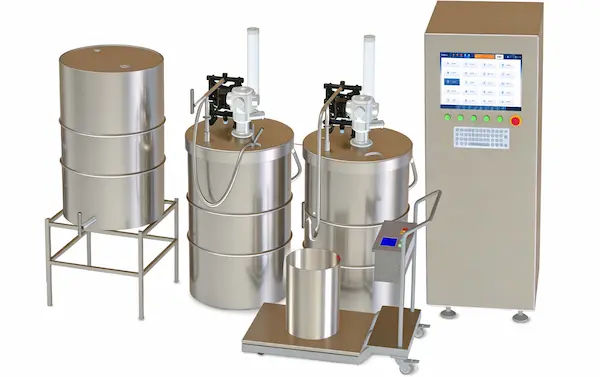
For manufacturers producing textured coatings and stone paint, automation is no longer limited to color dispensing and production management. Filling operations are becoming a critical area for efficiency improvement. Semi-automatic filling systems can help reduce material waste, improve filling accuracy, and lower labor costs while maintaining production flexibility. Learn more in our guide to semi-automatic filling systems for stone paint.
A Guide to Action for Industry Players
In this evolving landscape, how can companies position themselves for success?
1. Strategic Focus: Pivot to High-Value Segments: Companies should redirect resources from overcrowded, highly competitive markets toward high-growth areas. These include industrial coatings, functional coatings, and eco-friendly products.
2. Technology Investment: Build a Moat of Innovation: Achieving breakthroughs in core technologies, such as resin synthesis and special additive development, is crucial. It allows companies to differentiate their products and escape the trap of competing on price alone.
3 . Global Mindset: Tap into Emerging Markets: Companies should actively explore opportunities in overseas markets, especially in emerging economies across the Asia-Pacific region and other developing areas. This involves promoting high-quality, functional coating products to a global audience.
4. Embrace Green: Shape Your Brand Story: Integrating sustainability into the core of business strategy is vital. Companies should not only produce green products but also implement green manufacturing processes. This approach enhances brand value and demonstrates a commitment to corporate responsibility.
Conclusion
The coatings industry, a fascinating blend of tradition and modernity, stands at a critical crossroads. The period from 2025 to 2026 will be a time of significant challenge and opportunity. The companies that will succeed are those that can keenly observe these trends, boldly invest in innovation, and actively commit to a sustainable future. They are the ones who will not just cover surfaces, but intelligently redefine them, painting a brighter and more durable future for us all.
The coatings landscape continues to shift faster than annual forecasts can track. For a focused update on what is shaping the second half of 2026 specifically — from raw material pricing to automation adoption — see our latest analysis: H2 2026 Paint Industry Trends, Forecasts & Innovations.
Schedule a Free, No-Obligation Line Assessment Today!