In the world of flexible packaging, printing captures the spotlight with its vibrant graphics. However, the true guardians of package integrity, durability, and function operate behind the scenes: lamination adhesives and functional coating liquids. The processes of adhesive dispensing for bonding and precision coating for barriers are as critical as printing but are often hindered by manual inefficiencies. This article explores why mastering these fluid processes requires specialized industrial coating mixers and gravimetric dispensing systems, detailing the solutions that ensure reliability in every layer.
A perfect print fails if the laminate bond weakens or the sealant coat is inconsistent. Handling these materials presents unique, often more stringent, challenges than inks.
1.Critical Mix Ratios: High-performance lamination adhesives, especially 2K (two-component) systems like polyurethanes, depend on an exact stoichiometric mix ratio. A deviation over 1% can ruin bond strength, clarity, or chemical resistance.
2.Extreme Fluid Properties: Materials range from thin primers to paste-like sealants, demanding a system capable of broad viscosity control. Shear sensitivity means improper mixing can degrade performance.
3.Contamination Risks: Air entrainment during mixing creates micro-bubbles, leading to pinholes and weak points in the final film. This makes vacuum degassing a non-negotiable step for quality.
4.Process-Driven Deadlines: Many mixed adhesives have a strict pot life. Inefficient batching leads to material curing in the pot, causing waste and production delays.
5.Performance Dictated by Consistency: The peel strength of a laminate or the barrier property of a coating depends entirely on uniform, precise application. Inconsistency here is a direct cause of delamination and product failure.
Overcoming these challenges requires an engineered system built on core principles that guarantee repeatability and control.
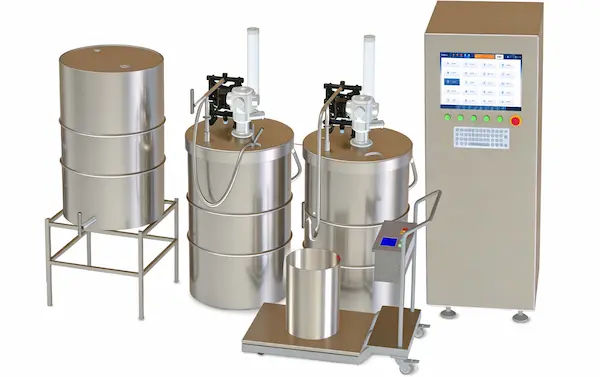
For high-viscosity liquids and multi-component systems, volume-based measurement is unreliable. A gravimetric dispensing system is the essential solution.
How it Works: High-resolution load cells weigh each component as it is delivered, ensuring the target mass ratio is met regardless of density or temperature variations.
Why it Matters: This is the only method that guarantees the polyurethane adhesive mixing ratio control required for perfect bonds. It transforms mixing from an art into a repeatable science.

Thorough blending must not damage the material’s chemistry or structure.
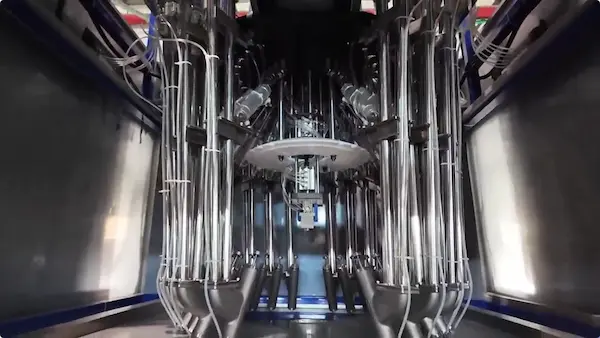
Dual-Axis Mixing: Combining a planetary sweep with a high-speed disperser ensures complete homogenization, eliminating “dead zones” where unmixed material can lurk—a key feature of a true industrial coating mixer.
Integrated Vacuum Degassing: A vacuum degassing mixer for adhesives removes entrapped air after mixing, preventing defects and ensuring a flawless, dense applied film critical for delamination prevention.
Precision hardware needs smart software to become a reliable production asset.
Recipe & Pot Life Management: Digital recipes lock in parameters for each material and substrate. Systems can be configured to batch sizes aligned with the adhesive’s pot life management, minimizing waste.
Full Process Traceability: Every batch record—actual weights, mix time, vacuum levels—is stored digitally. This ensures process traceability for quality audits and root-cause analysis, a cornerstone of modern MES integration.
Let’s examine how these principles deliver value in specific, high-stakes applications for the flexible packaging converter.
Scenario 1: Multi-Layer Flexible Packaging Lamination
Challenge: Bonding films and foils with 2K adhesives requires perfect ratios and bubble-free blends to ensure strong, clear laminates.
Solution: A 2K adhesive dispenser with gravimetric metering prepares the exact mix. A dual-axis vacuum degassing mixer then creates a homogeneous, bubble-free adhesive ready for the laminator. This automated mixing for flexible packaging lamination drastically reduces bond failures.
Scenario 2: Functional & Barrier Coating Application
Challenge: Applying uniform layers of barrier coatings (e.g., PVdC, EVOH) requires coating liquids of absolutely consistent viscosity and solids content.
Solution: A system designed for high-precision dispensing for functional coatings meters and blends components by weight. Integrated viscosity control loops can provide feedback, ensuring batch-to-batch consistency for optimal barrier performance.
Scenario 3: Sustainable Packaging with Advanced Adhesives
Challenge: Switching to solvent-free or water-based adhesive dispensing solutions supports sustainability but introduces new handling complexities like foaming and precise solids control.
Solution: Low-shear mixing minimizes foam. Gravimetric dispensing ensures the correct ratio of components, guaranteeing the adhesive forms a continuous film and achieves the required bond strength, making water-based adhesive performance reliable.
The greatest efficiency gains occur when adhesive and coating preparation is integrated into a plant-wide fluid management strategy. Imagine:
1.A work order from the MES automatically triggers the adhesive dispensing system to prepare a batch for Lamination Line #2.
2.The gravimetric dispensing system draws components from bulk storage, preparing a perfect batch with documented traceability.
3.This same philosophy of control used in the ink kitchen is applied here, creating operational consistency across the entire converting industry plant.
This transforms a potential bottleneck into a pillar of quality assurance and efficiency.

In the competitive flexible packaging converter market, printing excellence is expected. The next frontier for differentiation lies in mastering the ancillary fluid processes of lamination and coating.
Investing in a high-precision dispensing and mixing system for adhesives and coatings is a strategic decision that:
Eliminates costly bonding and barrier failures (delamination prevention).
Minimizes consumable waste through precise metering.
Provides ironclad traceability for quality audits.
Unlocks the consistent performance of advanced, sustainable chemistries.
By applying engineering rigor to these processes, you secure the entire value chain of your multi-layer film products, from the outermost graphic to the innermost seal.
Ready to Transform Your Adhesive and Coating Processes with Precision Engineering?
Mastering lamination and coating is the critical next step in building a world-class, integrated production facility. Our expertise lies in providing engineered gravimetric dispensing systems and industrial coating mixers that bridge the gap between the ink kitchen, the adhesive prep room, and the coating line.
Download our detailed Technical Brief: “Precision Beyond Print: A Guide to Advanced Adhesive Dispensing & Coating Mixing Systems.” This resource delves deeper into system specifications for high-viscosity liquids, vacuum degassing best practices, and ROI frameworks tailored for laminating and coating operations.