In today’s competitive printing industry, the efficiency and quality consistency of your shop floor directly determine profitability. Yet many printing companies remain trapped in a vicious cycle of problem-solving, with managers acting as firefighters constantly addressing emergencies. This reactive approach not only wastes significant resources but severely limits sustainable business growth.
The root cause often lies in the fragility of the production system—over-reliance on individual experience, lack of standardized processes, underutilization of equipment capabilities, and insufficient data collection and analysis. This article provides systematic solutions addressing core issues, focusing on how scientific management combined with modern technology can transform your printing operation from reactive to proactively intelligent.
The Core Challenge: Understanding the Technical Roots of Color Inconsistency
Color variation remains one of the most common and impactful issues in printing production. Its causes are multifaceted:
Human factors: Differing operator experience, visual fatigue, subjective judgment
Material factors: Ink batch variations, paper absorption changes, fountain solution fluctuations
Environmental factors: Unstable lighting conditions, temperature/humidity affecting color perception
Process factors: Lack of quantified color standards, imprecise ink mixing procedures
The True Cost of Color Problems
Beyond obvious waste, color inconsistency creates hidden costs that impact your entire operation. Consider these often-overlooked expenses:
Press downtime during color adjustments costs hundreds of dollars per hour
Excessive ink consumption from repeated color corrections
Paper waste from rejected sheets during color matching
Labor costs for skilled press operators spending hours on color correction
Customer dissatisfaction leads to lost business and damaged reputation
Systematic Solution: Implementing a Closed-Loop Color Management System
Essential Equipment & Technology Configuration:
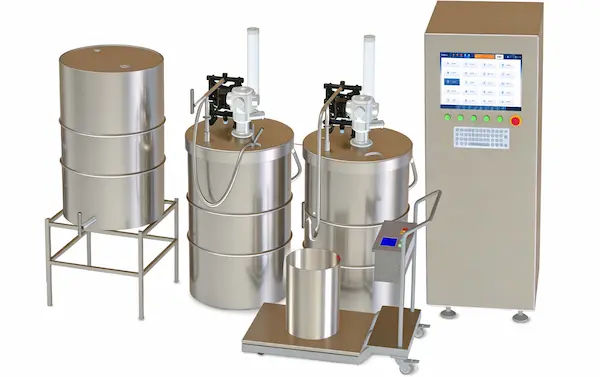
High-Precision Automated Ink Dispensing System
Utilizes gravimetric sensing technology with ±0.1g accuracy
Maintains formula database ensuring batch-to-batch consistency
Integrates automatic viscosity control for stable ink performance
Provides data traceability, recording actual consumption per batch
In-Line Spectrophotometer & Color Control System
Continuously monitors color bars, collecting LAB color data
Automatically calculates ΔE values and generates trend charts
Interfaces with press controls for automatic ink key adjustments
Establishes color alert system with automatic out-of-specification warnings
Implementation Strategy & Benefits:
First, establish standardized color management protocols including standardized lighting, measurement procedures, and tolerance settings. Then phase in automated equipment, prioritizing online inspection before upgrading mixing systems. Data shows companies implementing complete color management systems typically reduce color-related waste by over 60%, cut makeready time by 40%, and decrease ink consumption by 15%.
Real-World Implementation Steps:
1.Start with assessment: Conduct a color management audit to identify specific gaps
2.Establish baselines: Measure current waste levels and color accuracy
3.Train your team: Ensure operators understand color theory and measurement
4.Implement systematically: Begin with critical processes, then expand
5.Monitor and adjust: Use data to continuously refine your color processes
Key Takeaway: Effective color management is a competitive advantage. By implementing automated dispensing and inline monitoring, you transition color control from subjective judgment to objective data-driven precision. The investment typically pays for itself within 12-18 months through reduced waste and increased productivity.
The Core Challenge: Multiple Factors Behind Registration Problems
Misregistration affects both aesthetics and functionality. Primary causes include:
Material factors: Paper stretching/shrinking, substrate elongation
Equipment factors: Mechanical wear, drive system backlash, tension control instability
Environmental factors: Material deformation from temperature/humidity changes
Operational factors: Plate mounting errors, improper pressure settings
Advanced Solutions for Precision Control
Modern printing operations require more than basic maintenance to achieve perfect registration. Consider these advanced approaches:
Laser alignment systems for quick verification of machine components
Automated tension control that adjusts in real-time to material variations
Vibration analysis tools to detect developing mechanical issues
Predictive maintenance schedules based on actual equipment usage data
Systematic Solution: Comprehensive Precision Assurance System
Essential Equipment & Technology Configuration:
Environmental Control System
Maintains shop floor at 23±1°C, 50±5% relative humidity
Provides paper conditioning area ensuring material stabilization
Installs automatic monitoring with environmental parameter visualization
Intelligent Registration System
Employs high-resolution CCD cameras tracking registration marks
Uses adaptive algorithms automatically compensating for material distortion
Features learning capabilities memorizing different material characteristics
Offers remote diagnostics for rapid technical support
Implementation Focus & Results:
Environmental control forms the foundation for registration accuracy and should be prioritized. When selecting registration systems, consider compatibility with existing equipment and future upgrade paths. Companies implementing complete precision systems typically reduce registration waste from 3% to below 0.5% while increasing equipment utilization over 15%.
Proactive Maintenance Strategies:
Daily checks: Basic inspection of critical components
Weekly verification: Registration system calibration checks
Monthly comprehensive review: Full system evaluation and adjustment
Quarterly professional assessment: External verification of system performance
The Core Challenge: The Technical Nature of Drying Problems
Drying issues directly impact production efficiency and product quality, essentially representing energy transfer and material compatibility challenges:
Insufficient energy transfer: Inadequate dryer power, spectral mismatch
Complex material characteristics: Different substrates varying energy absorption
Improper process parameters: Incorrect temperature, air flow, distance settings
Environmental interference: Air movement, ambient temperature/humidity effects
Energy Efficiency Considerations
Modern drying systems must balance performance with energy consumption:
Heat recovery systems can capture and reuse wasted energy
Zone control allows different drying intensities across the web
Automatic power adjustment reduces energy use during slow speeds
Efficient reflector designs maximize energy transfer to substrates
Systematic Solution: Intelligent Drying Management System
Essential Equipment & Technology Configuration:
LED-UV Curing System
Uses specific wavelength LED sources with concentrated energy efficiency
Instant on/off characteristics, no warm-up, significant energy savings
Low heat generation suitable for heat-sensitive materials
20,000+ hour lifespan minimizing maintenance costs
Intelligent Drying Management System
Integrates IR thermometers monitoring substrate surface temperature
Automatically adjusts drying parameters based on speed, ink coverage
Includes energy monitoring optimizing power usage efficiency
Features remote monitoring enabling centralized multi-unit management
Implementation Strategy & Benefits:
Drying system upgrades require comprehensive consideration of existing equipment, product mix, and energy costs. Begin with detailed energy audits and process analysis to select optimal drying methods. Successful implementations typically reduce drying energy consumption over 30% while decreasing drying-related quality issues by 70%.
Operational Best Practices:
1.Match drying method to application: Different jobs require different approaches
2.Monitor substrate temperature: Avoid overheating sensitive materials
3.Maintain proper ventilation: Ensure adequate air exchange for optimal performance
4.Regularly clean components: Dirty reflectors and lenses reduce efficiency
5.Track energy consumption: Use data to identify optimization opportunities
Key Takeaway: Drying and curing form the critical link between printing and finishing. Implementing intelligent drying management solves quality issues while significantly reducing energy consumption, delivering both economic and environmental benefits. Modern systems typically achieve ROI within 18-24 months through energy savings and quality improvements.
The Core Challenge: Hidden Factors Behind Efficiency Losses
Low production efficiency often results from cumulative effects across multiple areas:
Excessive preparation time: Complex changeover procedures, lengthy adjustments
Poor equipment utilization: Frequent breakdowns, inadequate maintenance
Insufficient operator skills: Inefficient operation, limited problem-solving ability
Information flow barriers: Delayed production instructions, inefficient departmental coordination
Measuring What Matters
To improve efficiency, you must first measure it accurately. Key performance indicators should include:
Overall Equipment Effectiveness (OEE) measuring actual productive time
Makeready time from job completion to next job at full speed
Waste percentage tracking material utilization efficiency
Schedule adherence measuring on-time job completion
Systematic Solution: Complete Process Efficiency Enhancement System
Essential Equipment & Technology Configuration:
Automated Preset System
CIP3/CIP4 interfaces enabling automatic ink key and register presets
Intelligent recipe management with one-touch parameter recall
Mobile remote preset functionality allowing advance preparation
MES integration enabling automatic production information transfer
Quick-Changeover System
Standardized tooling and fixtures minimizing adjustment time
Visual operation guides reducing skill dependencies
Parallel process design maximizing preparation efficiency
Changeover time tracking and analysis supporting continuous improvement
Implementation Path & Results:
Efficiency improvement requires synchronized progress across technology, management, and personnel. Begin with value stream analysis to identify bottleneck processes for prioritized improvement. Successful implementations typically increase overall equipment effectiveness by over 20%, reduce order-to-delivery cycle times by 35%, and cut work-in-process inventory by 50%.
Continuous Improvement Framework:
1.Measure current state: Establish baseline performance metrics
2.Identify improvement opportunities: Focus on bottleneck operations
3.Implement solutions: Address root causes, not just symptoms
4.Standardize successful methods: Document and train new procedures
5.Repeat the cycle: Make continuous improvement part of your culture
The journey toward printing excellence requires commitment and strategic planning. By addressing these core challenges with appropriate technology and management systems, you can transform your operation into a competitive advantage.
Getting Started: A Practical Approach
Begin with a comprehensive assessment of your current operations. Identify which areas are causing the most significant losses in productivity, quality, or profitability. Many companies find that starting with one key area—whether color management, drying optimization, or efficiency improvements—creates momentum for broader transformation.
The Importance of Team Engagement
Successful implementation requires more than just technology. Your team members need proper training and engagement to maximize the benefits of new systems. Include operators in the planning process, provide comprehensive training, and establish clear performance metrics that align with your business objectives.
Measuring Success and ROI
Establish clear key performance indicators before beginning any improvement initiative. Track metrics including waste reduction, productivity improvements, energy savings, and quality enhancements. Most well-planned initiatives demonstrate clear return on investment within 12-24 months through a combination of direct savings and increased capacity.
The most successful implementations share common characteristics: clear objectives, phased implementation, staff engagement, and continuous measurement. Whether you start with color management, drying optimization, or efficiency improvements, each step builds toward comprehensive operational excellence.
Ready to transform your printing operation?
Our technical consultants specialize in helping printing companies identify improvement opportunities and implement practical solutions. We offer comprehensive facility assessments, technology recommendation reports, and implementation planning services.
Contact us today to schedule your complimentary operational assessment. Let us help you identify the most valuable improvement opportunities for your specific situation and develop a realistic implementation roadmap. Take the first step toward building a more efficient, profitable, and sustainable printing business.