The development of the paint industry is a story of continuous innovation, and at its colorful heart lies the evolution of tinting systems. This journey—from complete reliance on artisan skill to fully automated, computer-controlled precision—represents one of the most transformative revolutions in the field. This progression has not only drastically improved color accuracy and production efficiency but has also been a powerful catalyst for the industry’s shift towards environmental sustainability and intelligent operation. The story of tinting systems is, in essence, a microcosm of modern industrial advancement: a move from subjective experience to objective data, from manual variability to robotic consistency, and from high-pollution formulas to environmentally friendly solutions.
In the early days of the paint industry, tinting was not a science but a revered craft, entirely dependent on the skilled hands and accumulated experience of master tinters. These artisans were the living databases of color formulas. They worked from memory, handwritten notes, and an intuitive understanding of how different pigments interacted. The process was slow and methodical: carefully adding colorants, drop by drop or scoop by scoop, into a base paint, stirring manually, and waiting for the mixture to reveal its hue before making the next adjustment.
This method, while capable of producing beautiful results, was fraught with challenges that limited both quality and scale.
Poor Color Consistency: The “same” formula could yield noticeably different shades depending on the maker, the batch of raw materials, or even ambient conditions. A color mixed on Monday might not perfectly match the same formula mixed on Wednesday.
Low Production Efficiency: Matching a specific color could take hours or even days of painstaking trial and error, creating a significant bottleneck in manufacturing and project timelines.
High Dependency on Skilled Labor: A company’s color-matching capability resided almost exclusively in a few experienced individuals. This created a operational risk; if a master tinter left, their expertise and the company’s color consistency left with them.
Significant Waste Generation: Every failed batch or over-tinted can meant wasted raw materials. The cleaning of tools and containers consumed large volumes of solvents, contributing to hazardous waste streams.
This era, while foundational, highlighted the urgent need for a more reliable, scalable, and scientific approach to color creation.
The 1970s marked a pivotal turning point in tinting technology. In a landmark innovation, the Norwegian company Jotun introduced the world’s first electronically computerized tinting machine. This breakthrough heralded a new era, moving tinting from the realm of artisanal craft to that of precise engineering.
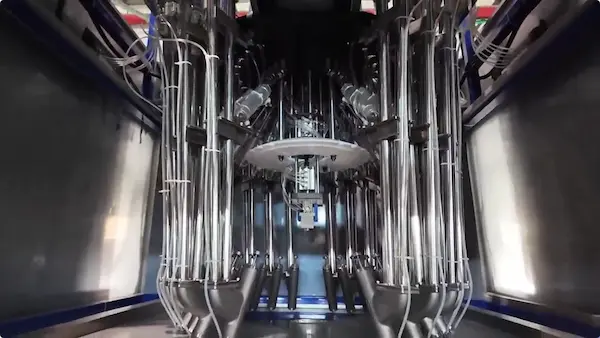
This revolutionary system replaced the human “eye and hand” with a mechanical “brain and arm.” It utilized stepper motors and servo controls to achieve a level of precision previously unimaginable. The machine could dispense colorants with incredible accuracy, controlling the minimum unit to just 0.308 milliliters—a volume equivalent to approximately seven drops of water. This leap in precision brought unprecedented consistency to color matching.
The impact was immediate and profound. For the first time, a specific color code could be reliably reproduced in any location, at any time. This standardization was crucial for brand identity and large-scale projects. By 2009, Jotun had begun a significant push to introduce its tinting systems, including the MCD for decorative paints and MCI for industrial coatings, into the Chinese market. Over nearly 50 years, this technology has seen widespread global adoption, with Jotun establishing over 11,000 tinting centers in more than 100 countries, including a strong network of over 300 centers in China alone.
As the 21st century progressed, growing environmental awareness and stricter regulatory pressures pushed the entire coatings industry towards a critical transition: the shift from solvent-based to water-based formulations. While this move significantly reduced the emission of Volatile Organic Compounds (VOCs), it introduced a new set of complex technical challenges for tinting systems.
Water-based resin systems are inherently more complex in their compatibility with colorants than their solvent-based counterparts. Key challenges included:
Pigment Flocculation and Flooding: The high surface tension of water makes it difficult to properly wet and stabilize pigments. This can lead to issues like flocculation (where pigments cluster together) and floating (where different pigments separate, causing a mottled appearance).
The Need for Specialized Dispersants: Formulating stable colorants for water-based systems required the development of entirely new families of dispersing and wetting agents compatible with aqueous chemistry.
The High-Performance Hurdle: This challenge was most acute in the industrial and heavy-duty corrosion protection sector. This field demands extreme performance—resistance to chemicals, moisture, and abrasion—that had traditionally been the domain of robust solvent-borne epoxies and polyurethanes. Convincing the market that water-based alternatives could meet these high standards was a monumental task.
The industry response was one of intense research and development. Through continuous innovation, the performance of new-generation water-based heavy-duty coatings began to approach, and in some cases even surpass, that of traditional solvent-borne products.
The evolution of Jotun’s tinting systems for water-based coatings serves as a perfect illustration of this industry-wide technological push. In 2021, Jotun launched its first-generation water-based MCA tinting system, representing an initial foray into this challenging new territory. This system provided valuable field data and technical insights.
After more than two years of refinement and technological accumulation, Jotun officially launched its new-generation water-based tinting system, the Multicolor WF, in 2023. This system was a significant step forward, designed specifically to overcome the compatibility challenges plaguing the industry.
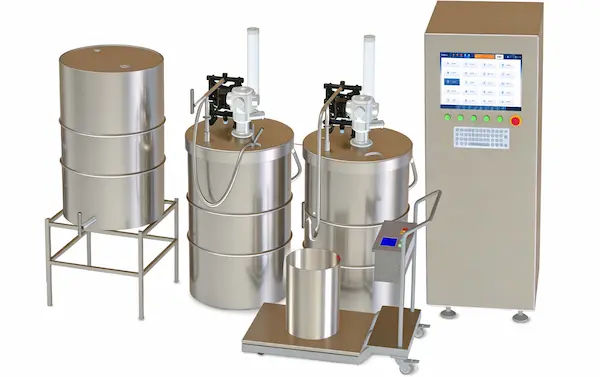
The Multicolor WF system is equipped with 15 specialized colorants formulated explicitly for water-based industrial paints. These colorants are free of toxic substances, heavy metals, and have VOC content far below national standards, embodying the principle of “green and low-carbon.” Its versatility is a key strength; the system can tint a wide range of coatings, from water-based acrylics to polyurethane topcoats, producing finishes from matte to high gloss, and providing weather resistance ratings from C2 to C5. This flexibility allows it to meet the diverse needs of various industrial applications.
The industry recognition for this innovation was swift. In September 2025, Jotun’s Multicolor WF system for industrial heavy-duty corrosion protection was awarded the “Excellent Case Study” prize at the “2025 Green Coatings Development Forum & 23rd Waterborne Technology Annual Conference” held in Chengdu, Sichuan. This award specifically acknowledged the system’s breakthrough in solving the industry-wide problem of compatibility between water-based colorants and high-performance industrial coatings. It demonstrated that even the most demanding water-based topcoats could now be tinted with the full accuracy, consistency, and efficiency of computer-controlled automation.
Looking ahead, the future of paint tinting systems points towards even greater integration of digitalization and a deepening commitment to sustainability. The next wave of innovation is likely to be driven by several key trends:
1. Artificial Intelligence and Cloud Computing: The integration of AI and IoT will take tinting to a new level of intelligence. Cloud-based platforms will enable real-time data sharing and collaborative formula optimization across a global network of tinting centers. AI algorithms will not only retrieve formulas but will also predict color trends, automatically correct for batch-to-batch variations in raw materials, and generate new, optimized formulas for novel coatings, further enhancing accuracy and reducing waste.
2 . Hyper-Connectivity and Industry 4.0: Tinting stations will become fully integrated nodes in smart factory networks. They will receive production orders directly from central ERP systems, manage inventory automatically, and provide real-time production data, contributing to a seamless, lights-out manufacturing operation.
3 . Advanced Sustainability: Environmental requirements will continue to tighten, pushing tinting systems towards even lower VOC emissions and higher environmental friendliness. We can expect the development of colorants derived from bio-based and renewable raw materials. Furthermore, tinting technology will play a crucial role in the circular economy, potentially enabling the accurate re-tinting of recycled paint, thus closing the loop on material use.
The evolution of paint tinting systems is a powerful narrative of technological progress. It is a history marked by the transition from subjective human judgment to objective digital data, from the slow pace of manual labor to the rapid throughput of automation, and from environmentally taxing solvent-based systems to green, water-based chemistries.
This journey reflects the coating industry’s relentless pursuit of precision, efficiency, and environmental responsibility. The humble paint tinter, once a simple can of pigment, has become a sophisticated, connected, and intelligent machine. As we look to the future, we can anticipate a continuous stream of innovations that will further propel the entire industry towards a smarter, more efficient, and fundamentally more sustainable future, contributing meaningfully to the construction of a greener society for all.